
The best basement flooring options for most homes are epoxy floor coatings, polished concrete, luxury vinyl plank, ceramic tile, and engineered hardwood over a sealed slab. Atlanta Concrete Coatings ranks these choices by how well each handles the moisture pressure common to Georgia’s clay-soil foundations, since that’s what impacts how long any basement floor lasts.
Most homeowners assume carpet or standard laminate is the obvious choice for a finished basement. In Georgia, that’s a risky assumption that could lead to ruined floors. Clay-soil foundations across Metro Atlanta push moisture vapor through the slab year-round, and porous or glue-down materials absorb that vapor until they warp, develop mildew, or lift at the edges. Across basement installs in Gwinnett, Fulton, and Forsyth counties, we’ve narrowed the reliable options to five, ranked by how each one handles moisture.
1. Our Top Pick for Georgia Basements: Epoxy Floor Coatings
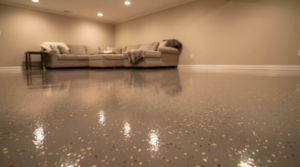
Epoxy is the most resilient basement finish for homes in Georgia. A properly installed system includes a vapor-barrier primer under a 100% solids topcoat, which cures into a dense, continuous film. That combination is designed to handle moisture rising from clay soil without the delamination that affects coatings applied over untested slabs.
Decorative flake or metallic finishes turn the slab into a stylish surface rather than just plain protection. Typical installed cost ranges from $4 to $9 per square foot, depending on the system type. Our epoxy flooring is the standard recommendation for finished basements in Buford, Alpharetta, and Cumming. Read up on concrete floor coating costs to learn more about this flooring solution.
2. Best for Clean Slabs: Polished Concrete
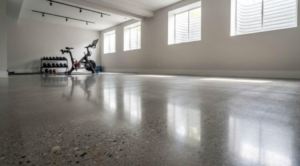
Polished concrete refines the existing slab into a finished, glossy surface through progressive diamond grinding and a penetrating sealer. It works best in basements with clean, structurally sound concrete already in place, where the owner wants low-maintenance, utilitarian square footage. Home gyms, workshops, and walkout game rooms are natural fits.
Polished floors in Atlanta, Georgia, still need to address the slab’s moisture before the sealer goes on. Because the finish uses the existing concrete, the total cost often comes in below that of an epoxy coating for the same square footage.
3. The Practical Middle Ground: Luxury Vinyl Plank (LVP)
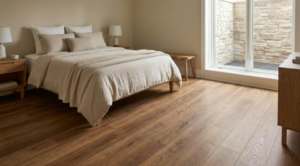
LVP is the only flexible synthetic we recommend for Georgia basement installations, and only when a proper vapor retarder and underlayment are installed first. Click-lock, rigid-core planks (SPC) handle the temperature and humidity swings below grade far better than standard laminate, which buckles once summer humidity meets a cool slab.
Plan on $4 to $7 per square foot installed. For basements used as guest bedrooms or media rooms, LVP gives you the warmth and feel of a traditional wood floor without trapping moisture against the concrete. The seams are sealed by the click system, but if moisture testing shows high vapor levels in your slab, the floor will still fail over time regardless of the material.
4. Best Where Water Rules: Ceramic or Porcelain Tile
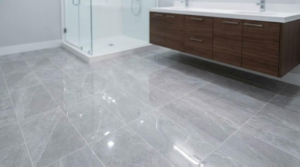
Tile handles moisture better than almost any other material and is a strong choice for basement bathrooms, laundry areas, and wet bars. Porcelain, in particular, resists cracking and staining, and properly sealed grout prevents vapor from migrating through the joints.
The trade-off is cold feet and a harder walking surface. If your basement plan involves long stretches of time standing or children playing on the floor, reserve tile for wet zones and pair it with epoxy or LVP in the living areas. Expect to pay $7 to $15 per square foot for tile.
5. Proceed with Caution: Engineered Hardwood Over a Sealed Slab
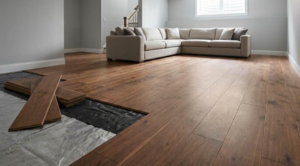
Engineered hardwood is only viable in Georgia basements when the slab has been sealed and a complete vapor barrier is installed underneath. Solid hardwood should be avoided entirely in Atlanta basements because the wood cups and cracks once humidity reaches the back of the planks.
Engineered panels use a plywood core that resists movement, but they are still the most moisture-sensitive option on this list. Budget $10 to $18 per square foot installed, and plan on honest moisture testing before the subfloor goes down.
Frequently Asked Questions
Is epoxy or vinyl better for a Georgia basement?
Epoxy wins on moisture tolerance and long-term durability; vinyl wins on warmth and quieter footfall. For basements that see occasional vapor from clay soil, epoxy bonds directly to a primed slab and handles vapor pressure without lifting. Atlanta Concrete Coatings usually recommends epoxy for the main living area and LVP in bedrooms.
Do I need a vapor barrier before any basement flooring?
Yes, you need a vapor barrier in almost every Metro Atlanta basement. Georgia’s clay soil drives moisture upward through the slab all year, which means any coating, tile mortar, or floating floor must sit above a tested vapor-barrier system. Skipping this step is the most common reason basement floors fail within the first two winters of use.
How long does a basement epoxy floor last in Georgia?
A 100% solids epoxy system installed over a properly prepped and vapor-tested slab typically performs for 10 to 15 years or more in residential basements. Its actual lifespan depends on foot traffic, cleaning habits, and whether a clear topcoat was applied. Coatings installed without moisture testing rarely last more than two to three years here.
Choose the Basement Floor That Fits Your Home
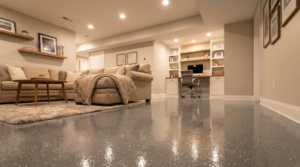
The real decision with basement flooring is flexibility versus rigidity, and durability versus warmth. How much moisture pressure is your slab producing, and how forgiving does the finish need to be in the rooms you actually use? Once you know those two things, the material shortlist narrows quickly.
Atlanta Concrete Coatings installs epoxy systems and polishes concrete slabs in basements across Metro Atlanta and North Georgia. Request a free basement estimate and we’ll test your slab before recommending a finish.