
Stained concrete and epoxy both upgrade a bare concrete floor, but they do fundamentally different jobs, and that’s the distinction that should drive your choice. Stained concrete soaks into the slab to add permanent color without building a surface layer. Epoxy does the opposite, bonding a thick protective coating on top of the concrete. One is a color treatment; the other is armor.
That difference decides which finish belongs in which room, and in Georgia it decides which one survives. Atlanta Concrete Coatings installs epoxy floor systems across Metro Atlanta and North Georgia. Below, we compare stained concrete and epoxy on appearance, durability, cost, maintenance, and the below-slab moisture that matters more here than anywhere else.
Appearance and Design Flexibility
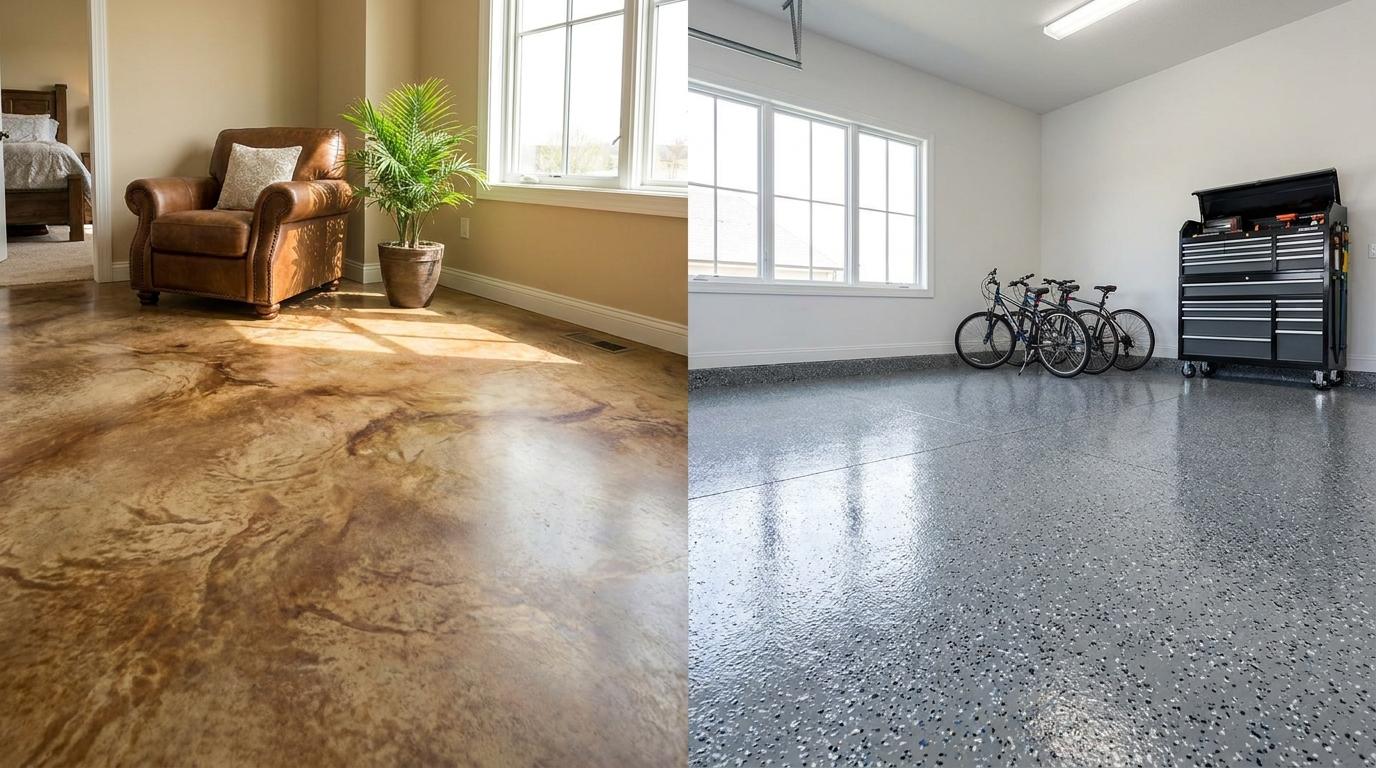
Stained concrete produces a marbled, variegated look by reacting chemically with minerals in the slab. No two stained floors are identical since natural variations create unique patterns of browns, blues, or earth tones. The result is a matte, organic finish suited to basements, sunrooms, and covered patios.
Epoxy takes the opposite approach, covering the concrete with a built-up surface in solid colors, decorative vinyl flakes, metallic pigments, or quartz broadcast. The flake systems Atlanta Concrete Coatings installs can be customized with different flake sizes and color blends. If you want a controlled, polished look, epoxy delivers.
Durability and Surface Protection
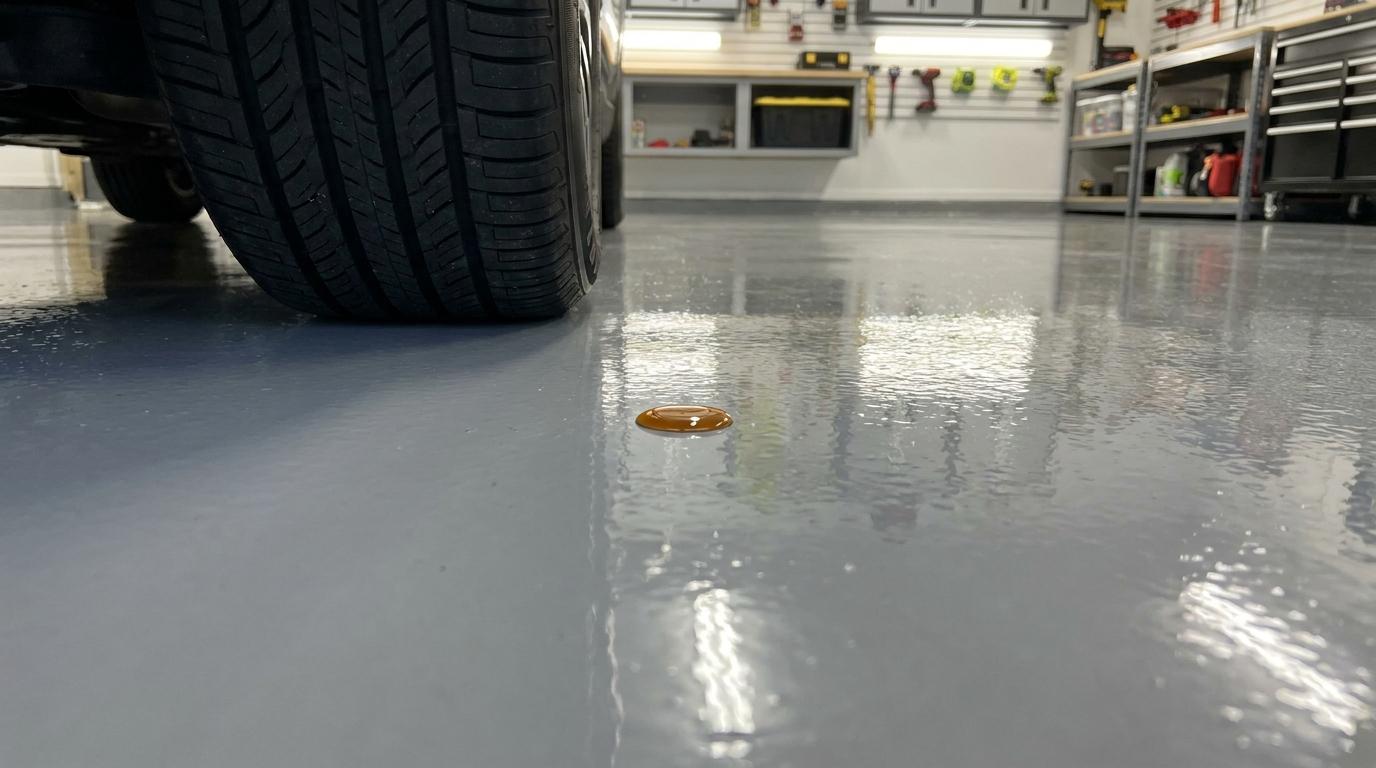
Stained concrete offers zero surface protection: the stain penetrates but builds no film. A stained floor needs a separate sealer against moisture and chemicals, and that sealer requires reapplication every one to three years.
Epoxy creates a dense, chemically resistant barrier. A 100% solids system with a vapor barrier primer and topcoat resists gasoline, motor oil, and household chemicals. Atlanta Concrete Coatings tests every slab for moisture vapor before installation, a critical step where Georgia clay soil forces vapor upward through the concrete.
Cost Comparison: Upfront and Over Time
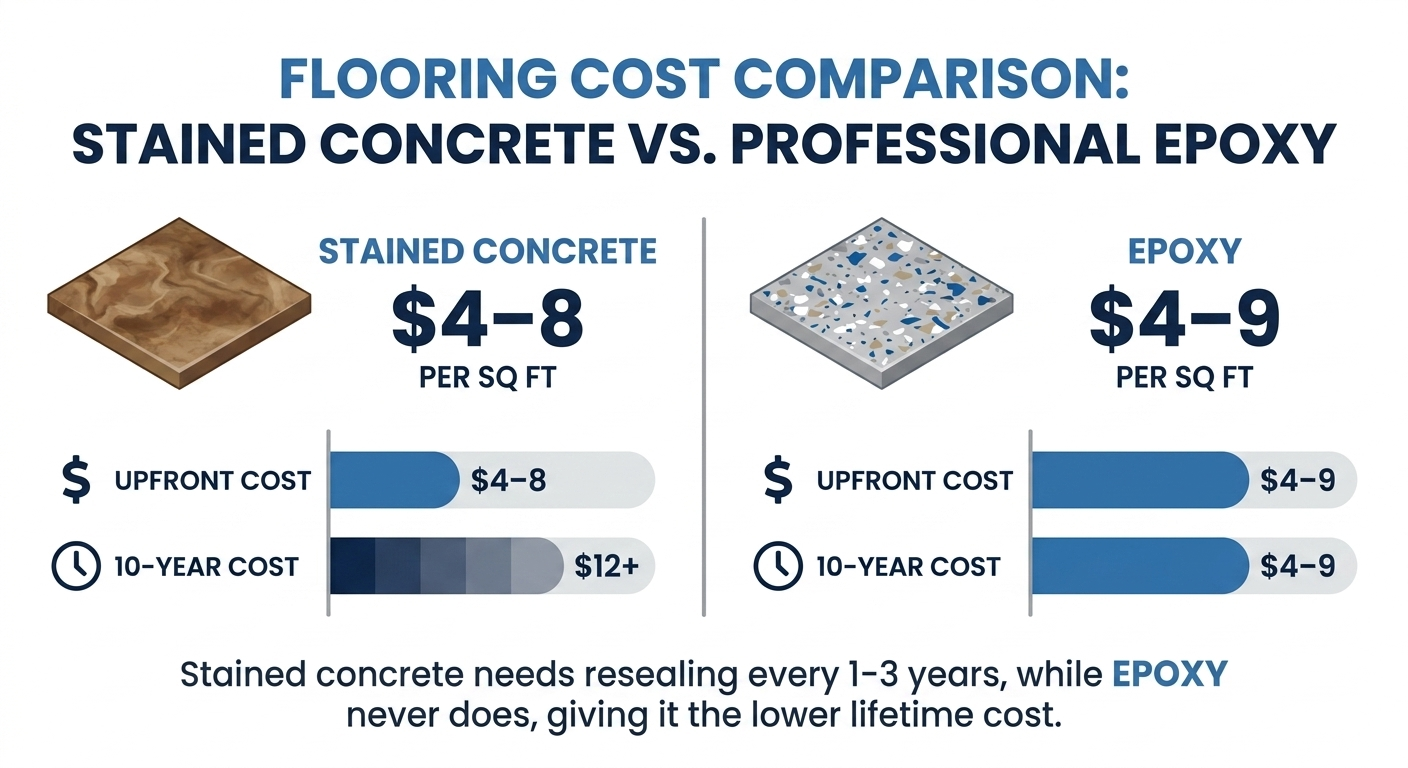
Stained concrete typically runs $4 to $8 per square foot professionally applied. Epoxy flooring in the Atlanta market runs $4 to $9 per square foot installed for a complete system including prep, primer, base coat, design layer, and topcoat.
The two prices overlap almost entirely upfront. What separates them is the long-term math. A stained floor needs resealing every one to three years at roughly $1 to $2 per square foot per cycle. Over ten years, repeating those reseals can match or exceed the one-time price of a professional epoxy floor, especially on larger surfaces where resealing scales with the area.
Maintenance and Long-Term Care
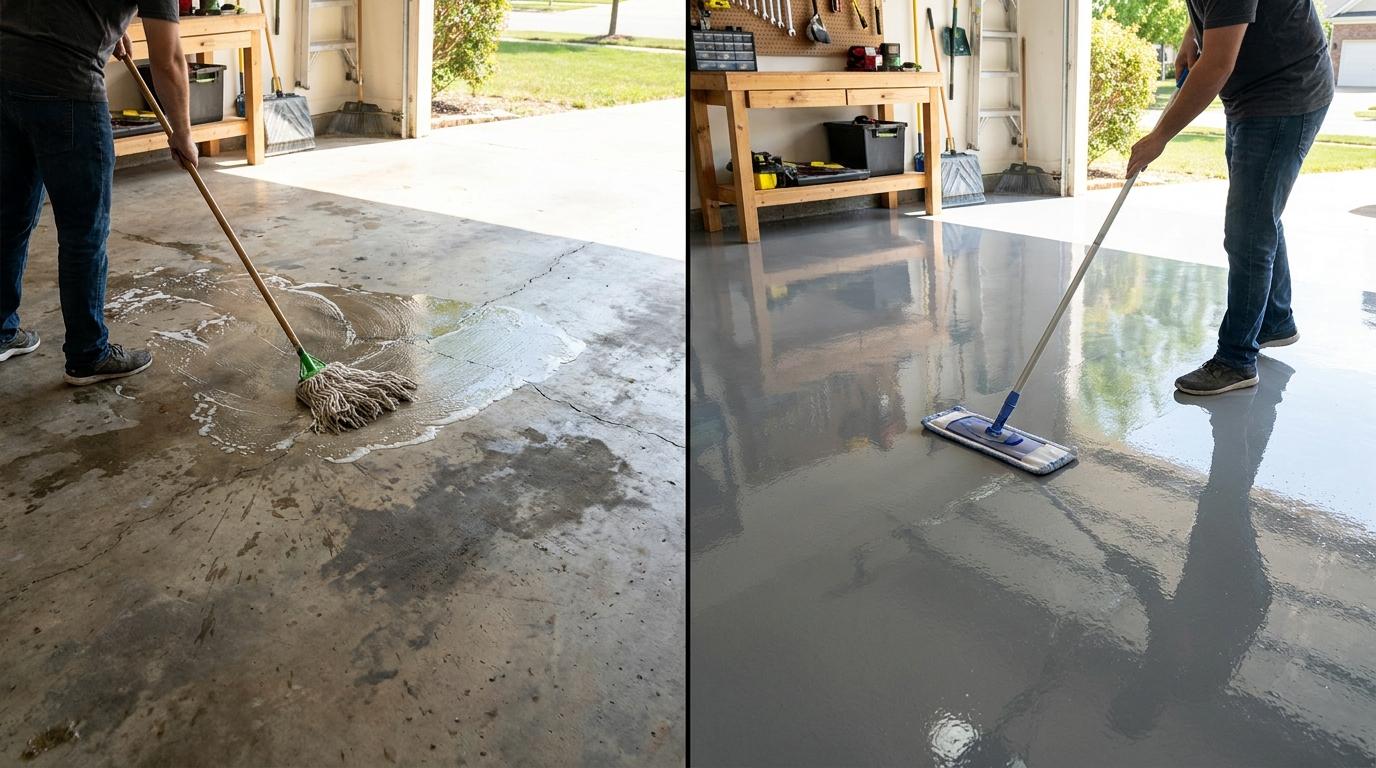
Stained concrete needs a cleaning routine that avoids acidic or abrasive cleaners. When the sealer wears thin, the entire floor needs cleaning, possible buffing, and a fresh sealer coat. This catches a lot of homeowners in older Sandy Springs houses off guard, where an existing stained basement floor can look fine for years and then need a full reseal the moment the topcoat gives out.
Epoxy floors, by contrast, can be cleaned with a dust mop and a pH-neutral cleaner. The surface is non-porous, so spills sit on top. A properly installed epoxy floor needs no resealing because the topcoat itself is the wear layer, designed to handle daily use for well over a decade.
Which Works Better in Georgia’s Climate?
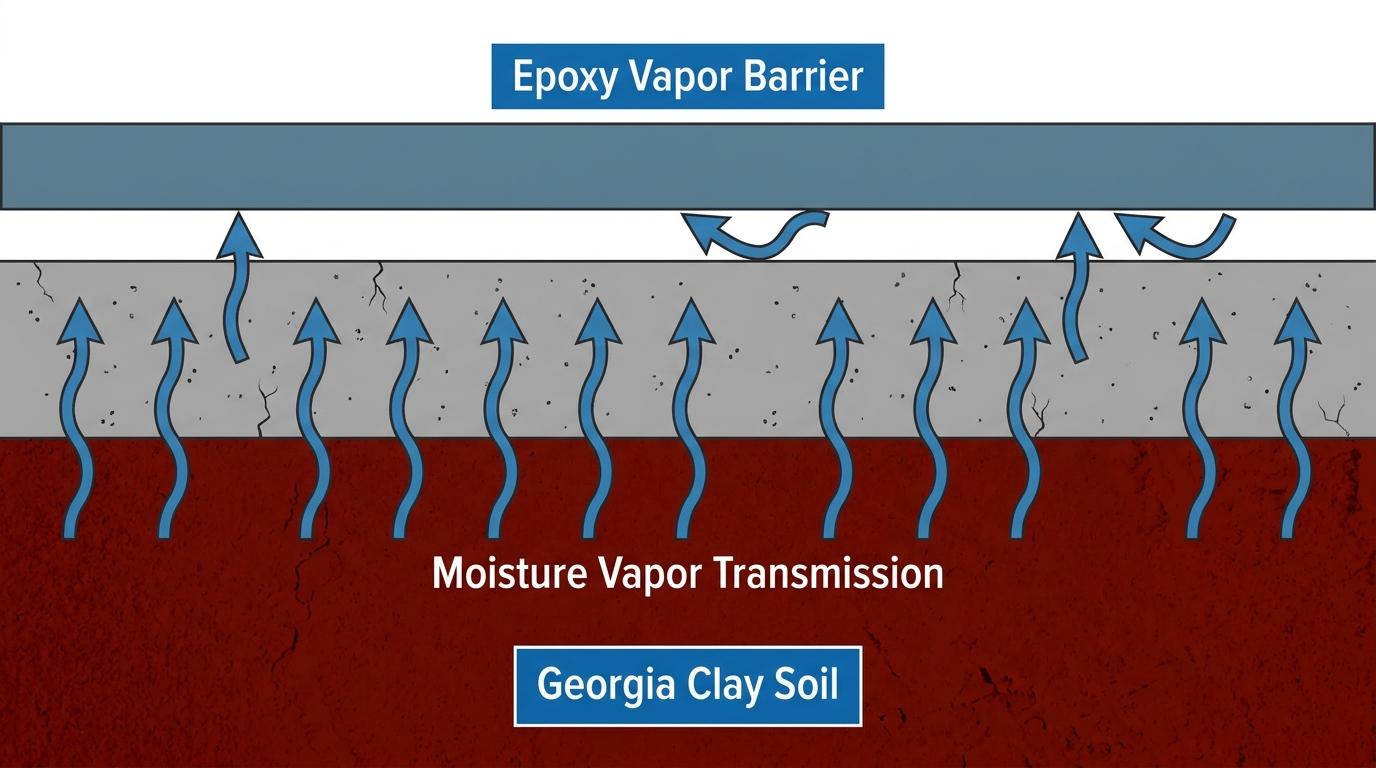
Georgia’s red clay soil and high humidity create below-slab moisture vapor that rises through concrete. This is the single biggest threat to any floor finish in Metro Atlanta.
Epoxy installed with vapor testing and a moisture-mitigating primer blocks that vapor transmission. Atlanta Concrete Coatings builds moisture testing into every installation because Georgia slabs routinely show elevated vapor levels. Stained concrete with a standard topical sealer offers no meaningful vapor barrier: moisture still moves through the slab and can lift the sealer from underneath. For garages and basements across Metro Atlanta and North Georgia, epoxy is the more reliable long-term answer.
Frequently Asked Questions
Can you apply epoxy over stained concrete?
You can apply epoxy over previously stained concrete only if the sealer is completely removed through diamond grinding. Any remaining sealer or wax will cause the epoxy to delaminate within months. Diamond grinding strips the old sealer and profiles the concrete so the epoxy primer bonds mechanically.
Does stained concrete hold up in a garage?
Stained concrete in a garage wears faster than epoxy because the stain provides no surface protection of its own. Hot tires and gasoline drips wear through sealers quickly. Epoxy garage flooring lasts longer because the coating itself resists chemicals and abrasion.
Which finish adds more value to an Atlanta home?
Epoxy garage and basement floors offer stronger resale appeal in Metro Atlanta because buyers recognize them as a low-maintenance, finished surface. A stained floor adds aesthetic value in sunrooms, but for garages buyers prefer the look of a professionally installed epoxy flake system.
Which Finish Fits Your Home?
Stained concrete is the right call for low-traffic spaces where a natural, variegated look is the goal, sunrooms, covered patios, and finished basements where moisture is already under control. What it won’t do is protect the surface or hold back the vapor rising through a Georgia slab on its own.
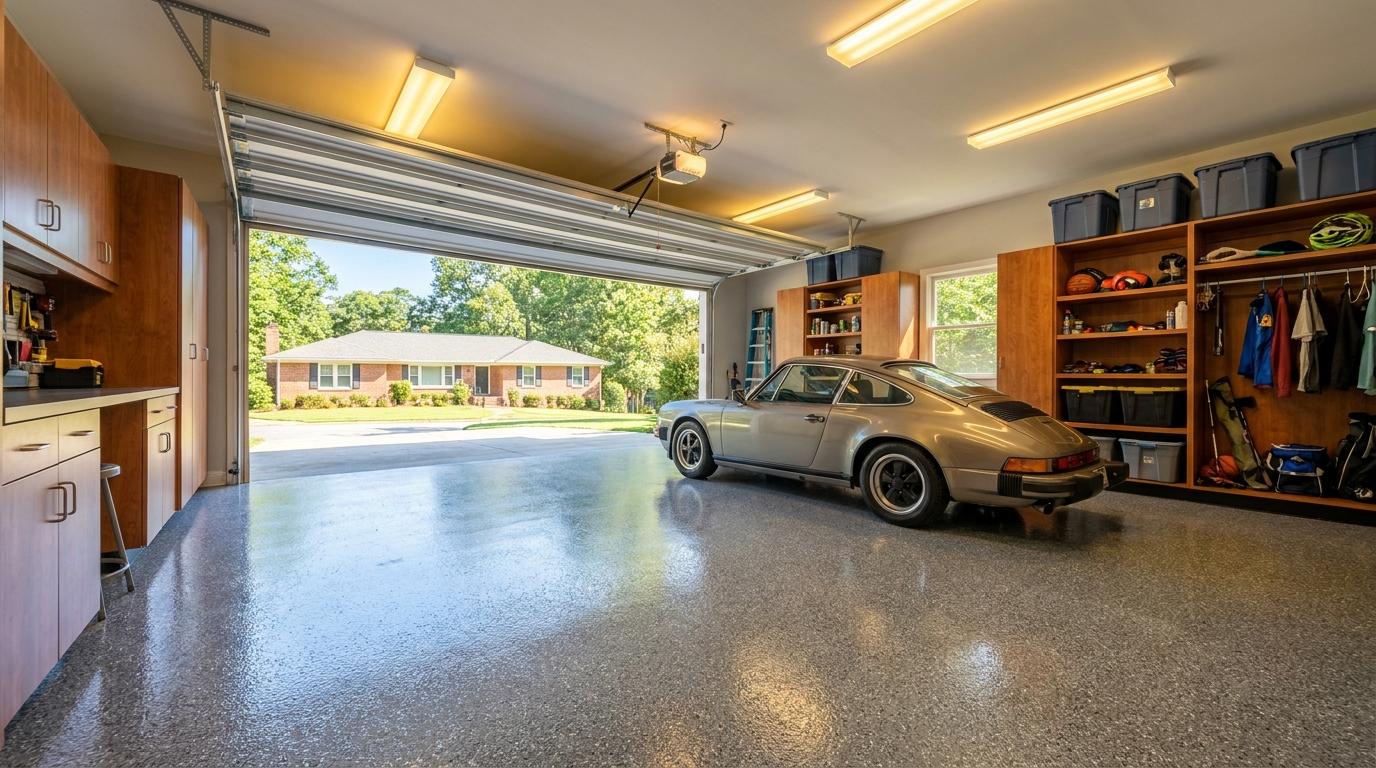
Epoxy is the stronger choice for garages, basements, and any floor facing daily use or moisture. A professionally installed 100% solids system contains no carrier solvents that evaporate during cure and leaves a denser, more durable film. Paired with upfront moisture testing, you get a floor that resists spills, cleans with a dust mop, and lasts 10 to 20 years without resealing.
For a free estimate on epoxy for your garage, basement, or commercial space, contact Atlanta Concrete Coatings at (770) 626-4524. We serve homeowners and businesses across Metro Atlanta and North Georgia, from Buford to Peachtree City.