Most epoxy floor problems in Metro Atlanta trace back to three root causes: moisture vapor trapped under the coating, inadequate surface preparation, or the wrong topcoat for the conditions. Get those three right and bubbling, peeling, yellowing, and hot-tire damage are almost entirely preventable, which means most failures aren’t really about the epoxy at all.
That distinction matters, because when a garage floor starts bubbling six months after installation, the coating itself is rarely at fault, it’s what was skipped before the coating went down. Atlanta Concrete Coatings coats slabs across North Georgia that sit over Georgia red clay, where moisture vapor is the single biggest threat to a coating’s bond. This is why we build prevention into the prep: moisture testing, diamond grinding, and a 100% solids primer. Let’s explore each problem, its specific cause, and how to stop it before it starts.
Bubbling and Blistering: The Moisture Problem
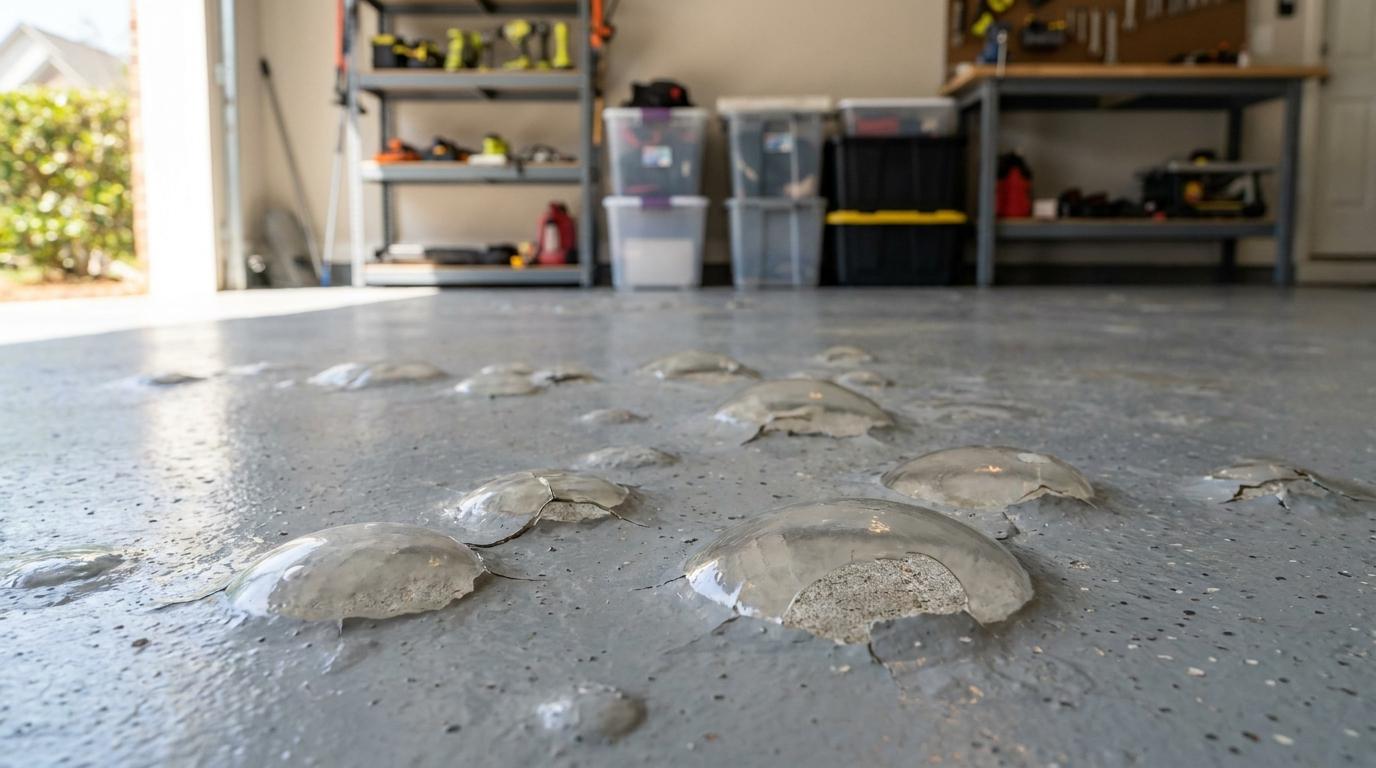
Bubbling is the most common epoxy failure in Atlanta. Georgia’s red clay holds water against the concrete year-round, driving vapor upward through the slab. If the installer skips a moisture test or uses a water-based primer instead of a 100% solids vapor barrier, trapped vapor forms blisters under the coating within months. Atlanta Concrete Coatings performs moisture testing as a standard step on every project, not an optional upgrade, because clay soil makes vapor transmission the default condition here.
Peeling and Delamination: The Surface Prep Problem
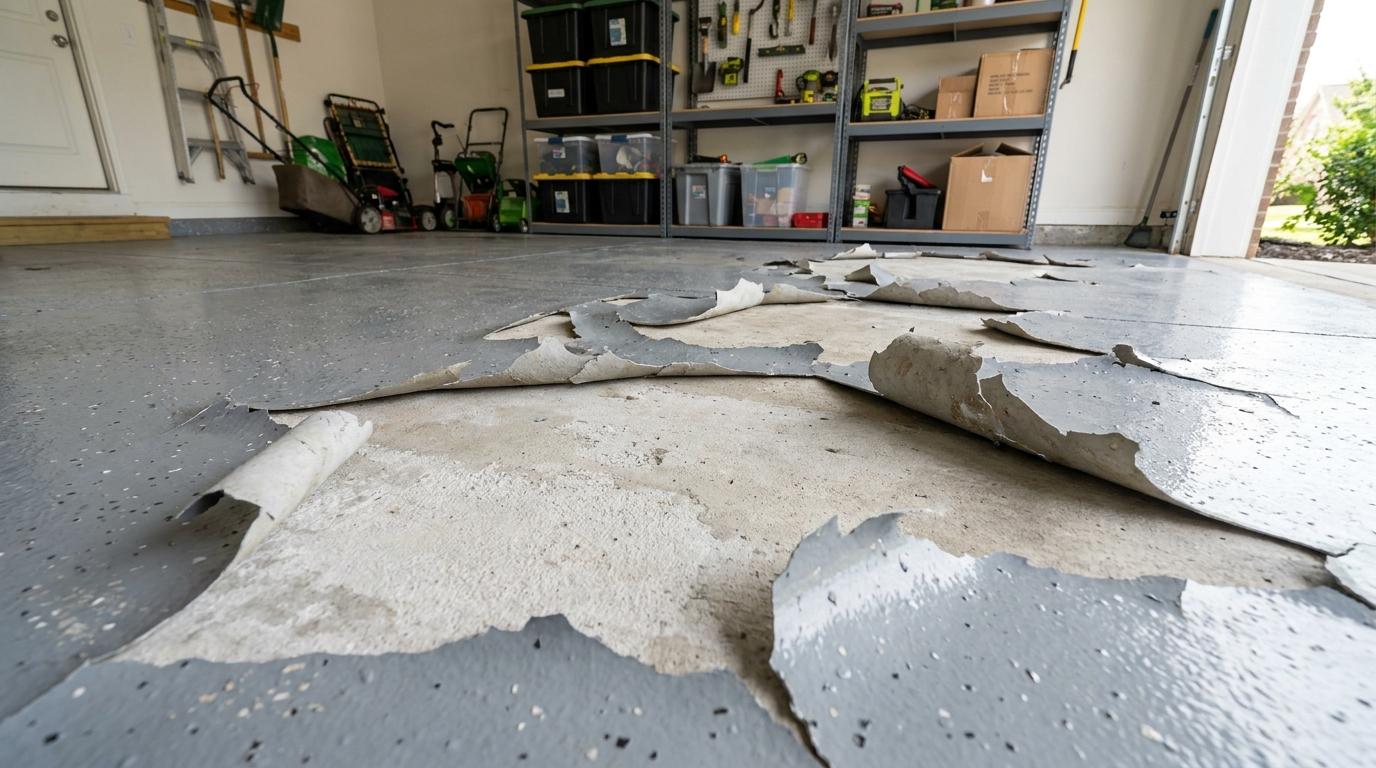
Epoxy bonds to the surface profile created by diamond grinding, not to smooth concrete. When a contractor skips grinding and uses acid etching instead, the coating sits on top of the slab rather than locking into it. Within a year or two, tires and foot traffic peel the coating up in sheets. For slabs that have already had one coating fail, the prep is even more demanding, the old coating must be ground off completely.
Hot Tire Pickup: The Topcoat Problem
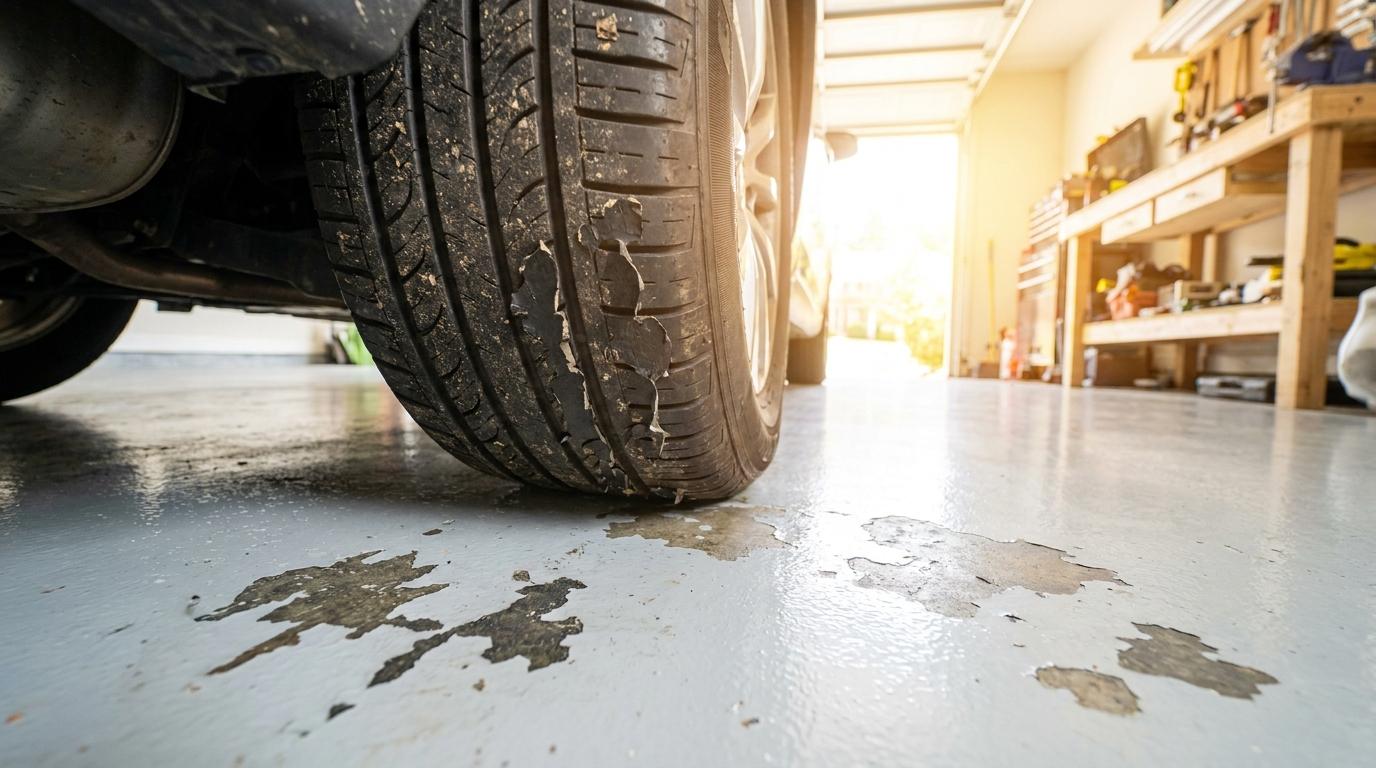
Atlanta summers push garage temperatures past 100 degrees, and a hot tire’s surface can exceed 140 degrees. Standard epoxy topcoats soften at those temperatures, the tire’s rubber bonds to the surface, and when the car pulls away, it lifts the coating. A polyaspartic or polyurethane topcoat stays dimensionally stable well past the temperatures that soften epoxy. Atlanta Concrete Coatings uses polyaspartic clear coats on garage floors specifically to prevent hot tire pickup in this climate.
Yellowing and Fading: The UV Problem
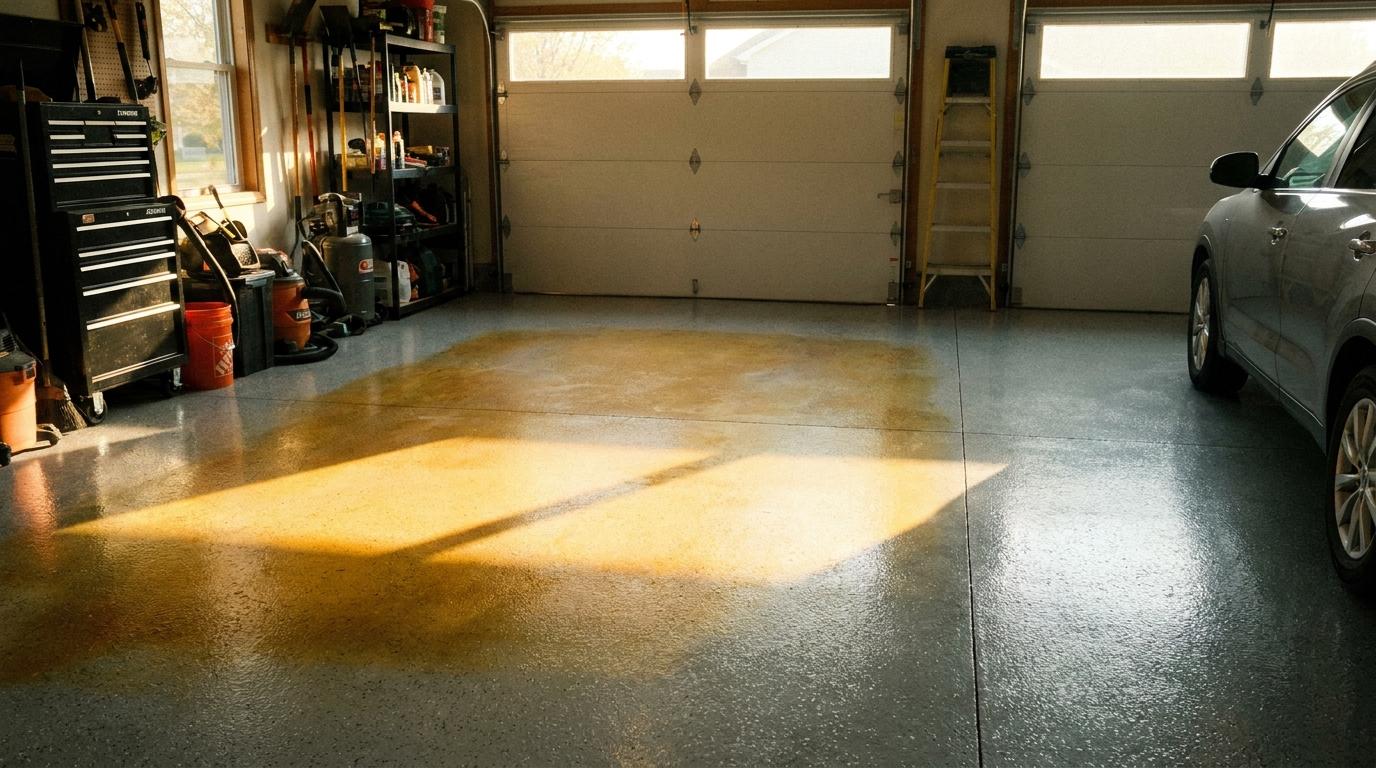
Epoxy resin yellows under UV within one to three years, a chemistry limitation, not a defect. For garages with windows or doors that let in direct sun, a polyaspartic or aliphatic urethane topcoat blocks UV and keeps the color stable. In a fully enclosed garage, standard epoxy holds its color fine. Atlanta Concrete Coatings serves the full Metro Atlanta area and evaluates UV exposure during every estimate.
Staining and Chemical Etching: The Protection Problem
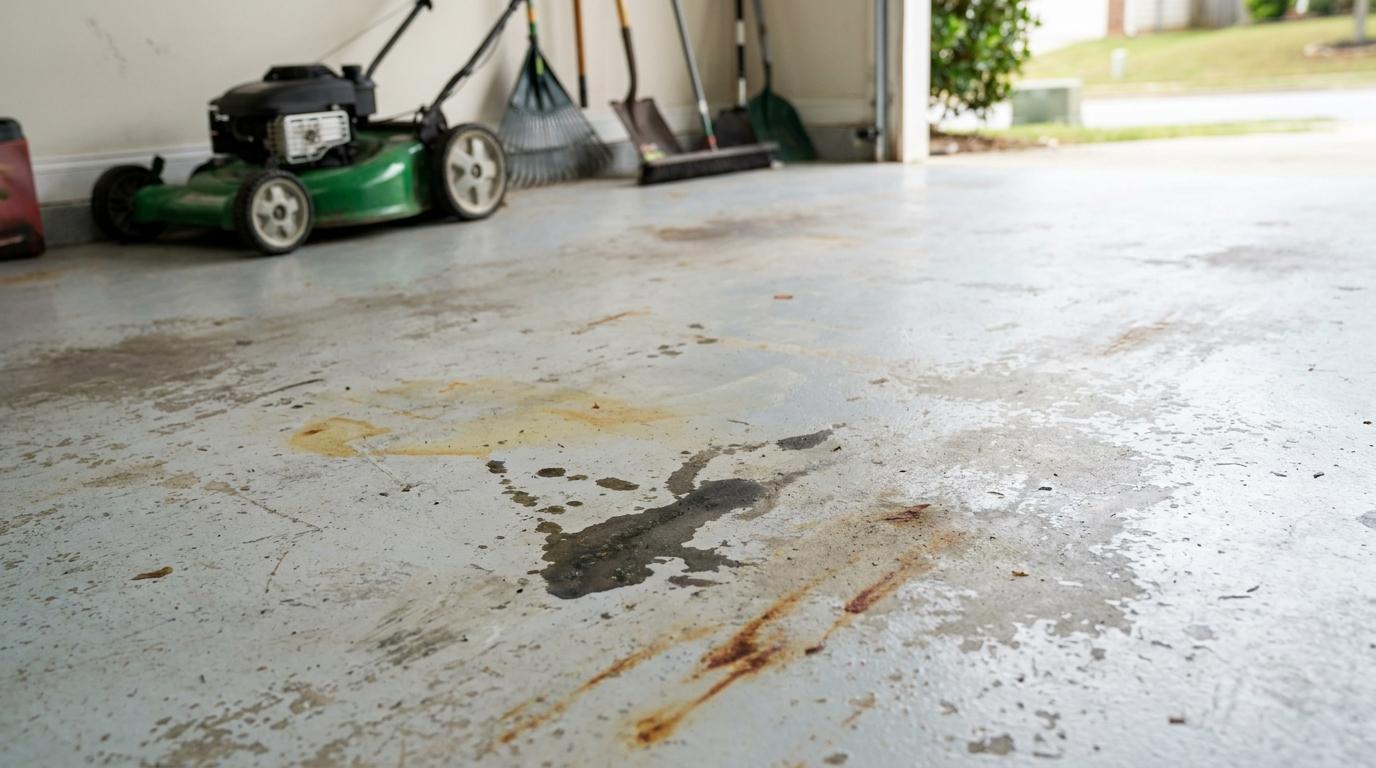
Gasoline, brake fluid, fertilizer, and motor oil land on garage floors routinely. A properly cured high-performance topcoat resists them all, a water-based DIY kit does not. The difference is cross-link density: 100% solids epoxy and polyaspartic topcoats form a tight molecular network that liquids cannot penetrate. Atlanta Concrete Coatings offers a range of coating systems with the chemical resistance Atlanta garages actually need, from decorative flake to quartz broadcast.
Frequently Asked Questions
Can you fix an epoxy floor that is already bubbling or peeling?
A bubbling or peeling epoxy floor can be fixed, but the failed coating must be diamond-ground off completely, spot repairs peel again within months because the surrounding coating has already lost its bond. The slab must be moisture-tested and a new system installed with proper surface profiling and a 100% solids primer. In Atlanta’s clay soil, skipping the moisture test on a re-coat job makes it nearly certain the replacement fails the same way.
How do I know if my concrete slab has a moisture problem before coating?
A slab has a moisture problem if a calcium chloride test reads above 3 pounds per 1,000 square feet per 24 hours, or if an in-situ RH probe reads above 75% relative humidity inside the concrete. Atlanta Concrete Coatings runs these tests before every installation as a mandatory step. Visible signs like white powdery residue, damp spots, or a musty smell hint at moisture issues, but only a calibrated test gives a reliable number.
Are DIY epoxy kits more likely to have problems than professional installation?
DIY epoxy kits fail faster than professional installations primarily because they skip the surface preparation that creates a mechanical bond. Most kits use an acid-etch solution that cleans but does not profile the concrete, so the coating relies on a weak chemical bond that fails under tire heat and moisture, commonly within 12 to 24 months in Atlanta’s humidity. Professional installations use separate primer, build coat, and topcoat layers with higher solids content.
Stop Problems Before They Start
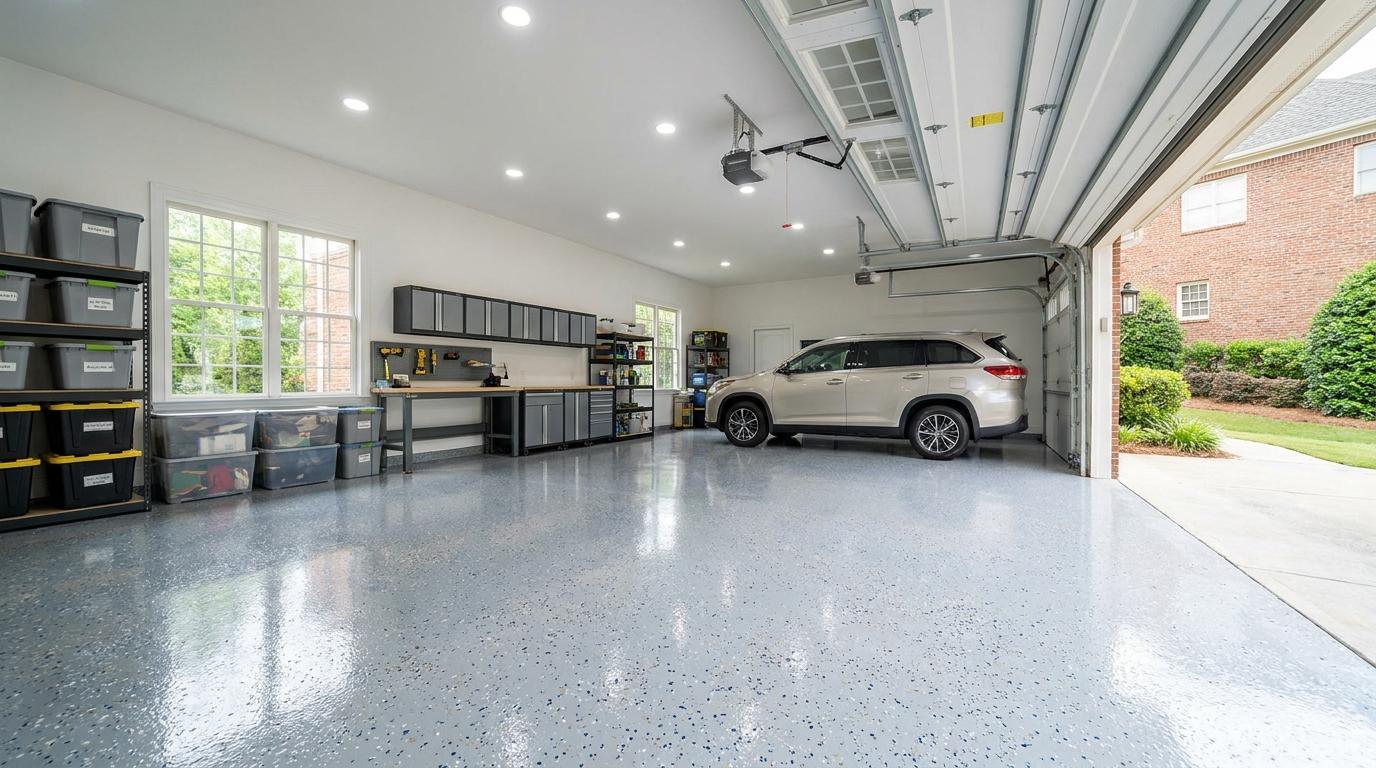
The five problems above share a common thread: they happen when installation steps get skipped, not because epoxy is unreliable. Moisture testing, diamond grinding, a 100% solids primer, and a climate-appropriate topcoat allow a floor to last a decade instead of failing during the first year.
Atlanta Concrete Coatings provides free estimates across Metro Atlanta and North Georgia. Contact us today at (770) 626-4524 to schedule an evaluation. And if you have had a coating fail before, ask about the moisture test. It’s the first thing that should happen on any Atlanta slab.