Polished concrete vs. epoxy flooring is a common dilemma for Atlanta homeowners and business owners upgrading their concrete floors. Polished concrete costs $3 to $12 per square foot and works best in low-moisture commercial spaces, while epoxy costs $4 to $9 per square foot and delivers stronger moisture vapor protection. Atlanta Concrete Coatings installs both systems across Metro Atlanta. We test every slab for moisture before recommending one over the other, maximizing each system’s lifespan in Georgia.
Metro Atlanta sits on clay soil that pushes moisture through concrete slabs year-round. That single fact changes which finish performs better here compared to drier markets west of the Mississippi. This guide compares polished concrete and epoxy across cost, moisture performance, durability, and where each finish actually belongs.
Cost Comparison: Polished Concrete vs. Epoxy

Comparing polished concrete vs. epoxy reveals that both offer competitive pricing, but the final investment hinges on what you need from your floor.
Polished Concrete Pricing
Polished concrete costs $3 to $12 per square foot depending on the level of gloss and the condition of the existing slab. A basic grind-and-polish runs less than a high-gloss mirror finish. Damaged or previously coated slabs need more grinding, which adds to the total.
Epoxy Pricing
Epoxy costs $4 to $9 per square foot in Atlanta for a professional installation. That includes surface preparation, moisture testing, base coat, decorative layer, and protective clear topcoat.
For residential garages, epoxy tends to cost less overall because polished concrete on a residential slab often requires extensive repair and leveling first. For large commercial spaces with clean, flat slabs, polished concrete is typically the more economical option.
Durability and Moisture Protection in Atlanta
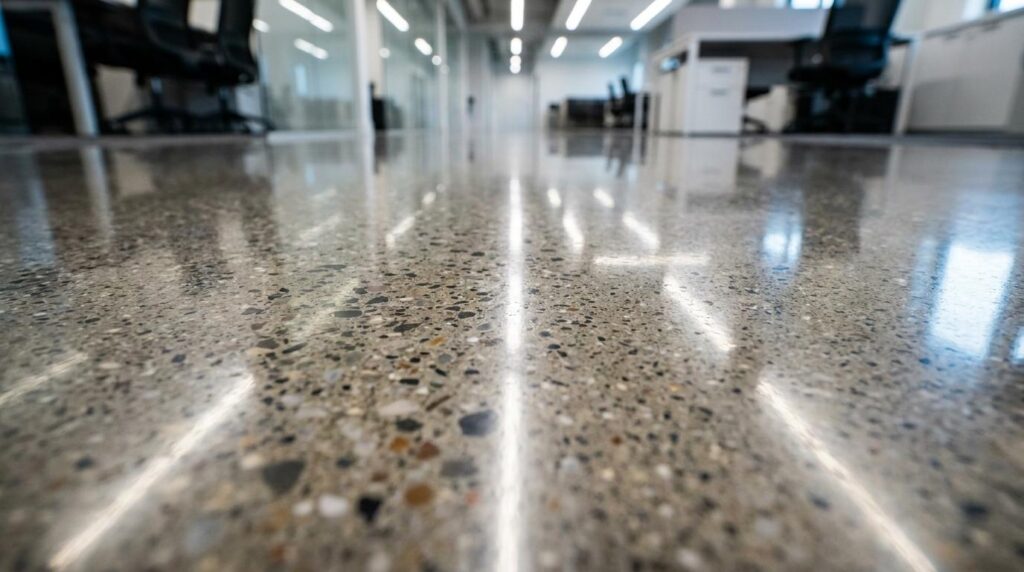
Both finishes are durable, but they protect concrete in different ways.
Polished Concrete
Polishing densifies the top layer of the slab, creating a hard, dust-free surface that resists wear and makes cleaning straightforward. It doesn’t add a protective film on top of the concrete, which means it doesn’t block moisture vapor from rising through the slab. In Atlanta garages sitting on Georgia clay, that missing vapor barrier is a meaningful limitation.
Epoxy Coatings
Epoxy adds a bonded film layer that seals the surface and blocks moisture vapor transmission. When installed with a vapor barrier primer, it handles the below-slab moisture pressure that clay soil creates. Epoxy also resists chemicals, oil stains, and hot-tire transfer. For garages and basements in Metro Atlanta, that sealed barrier is the main performance advantage over polished concrete.
Best Applications for Each Finish
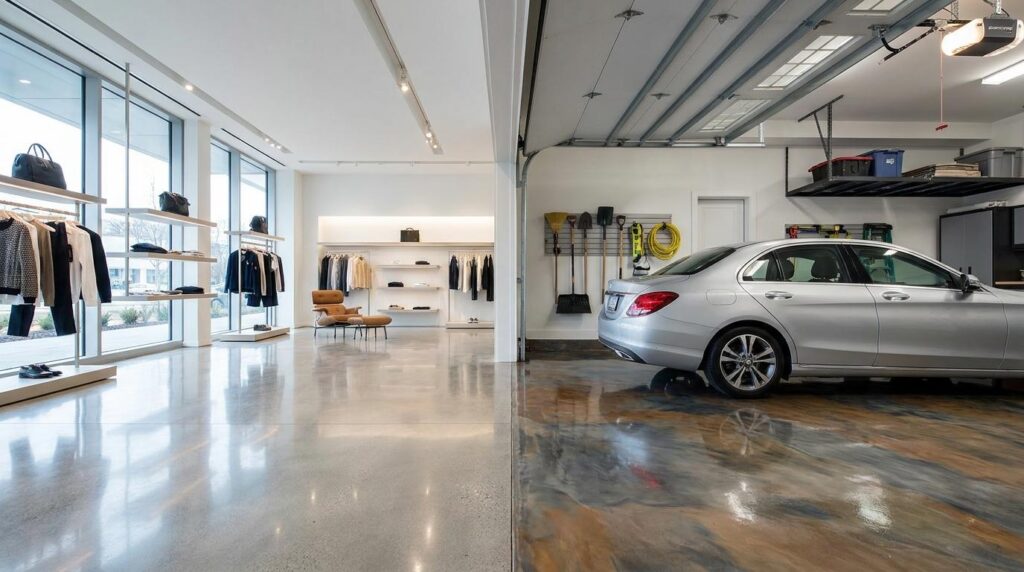
Choosing between polished concrete and epoxy depends more on the space than the material. Atlanta Concrete Coatings installs both systems and typically recommends:
- Polished concrete for: Retail showrooms, offices, restaurants, and large commercial warehouses where the slab is in good condition and moisture vapor isn’t a primary concern
- Epoxy for: Residential garages, basements, commercial kitchens, and industrial spaces where chemical resistance, moisture protection, or decorative options matter
Polished concrete shines in open commercial environments where its natural reflective surface reduces lighting costs. Epoxy shines in enclosed spaces where moisture, chemical spills, and heavy vehicle traffic challenge the floor daily.
Neither finish is universally better. The right choice depends on slab condition, environment, and what you need the floor to withstand. If you’re not sure which direction fits, a slab assessment answers the question.
Frequently Asked Questions
Can you polish a concrete floor that already has epoxy on it?
Not directly. The existing epoxy needs to be fully removed by grinding before polishing can begin. Polishing works on bare concrete, not on top of a coating layer. Atlanta Concrete Coatings can assess whether removal and polishing is practical for your specific slab.
Which finish lasts longer: polished concrete or epoxy?
Both are designed to deliver 15 to 20 years of performance in the right environment. Polished concrete performs best in dry, climate-controlled commercial spaces. Epoxy performs best in garages, basements, and spaces with moisture or chemical exposure. Climate and use case matter more than the material itself.
Is polished concrete slippery when wet?
Dry polished concrete provides good traction. When wet, higher-gloss finishes can be slippery. For spaces where wet conditions are common, epoxy with anti-slip additives or a lower-gloss polished finish provides better grip and safer footing.
Talk to a Team That Installs Both
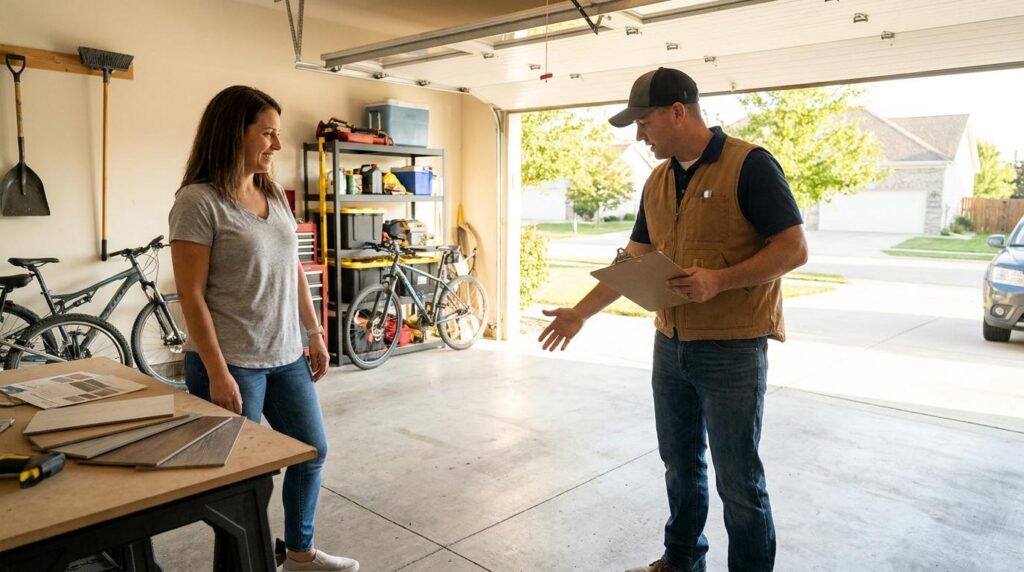
Polished concrete and epoxy both protect concrete, but they solve different problems. Polished concrete fits dry commercial spaces with clean slabs. Epoxy is ideal for garages, basements, and any space where Georgia’s below-slab moisture or chemical exposure demands a sealed surface.
The initial cost difference between the two is smaller than most homeowners expect. The long-term performance difference, especially in moisture-prone Atlanta garages, is much larger. Atlanta Concrete Coatings installs both systems across Metro Atlanta and recommends one over the other based on what the slab actually needs.
Contact Atlanta Concrete Coatings to book your free estimate, or call (770) 626-4524 to discuss which finish fits your project.