
Preparing a concrete floor for epoxy coating starts with moisture testing, followed by mechanical diamond grinding, crack repair, and a thorough final cleaning before any primer goes down. Atlanta Concrete Coatings treats each step as non-negotiable because skipping any of them is the most common reason epoxy floors peel or bubble within the first year.
A garage slab we reset last spring in Cumming had peeled in four separate spots within eight months of a DIY epoxy kit. After a full prep reset that included diamond grinding, moisture correction, and a fresh 100% solids primer, the same floor has stayed tight and glossy through two Georgia summers. The difference wasn’t the product. It was the prep. This guide explains exactly what proper surface preparation looks like.
Why Surface Prep Decides Whether Your Epoxy Lasts
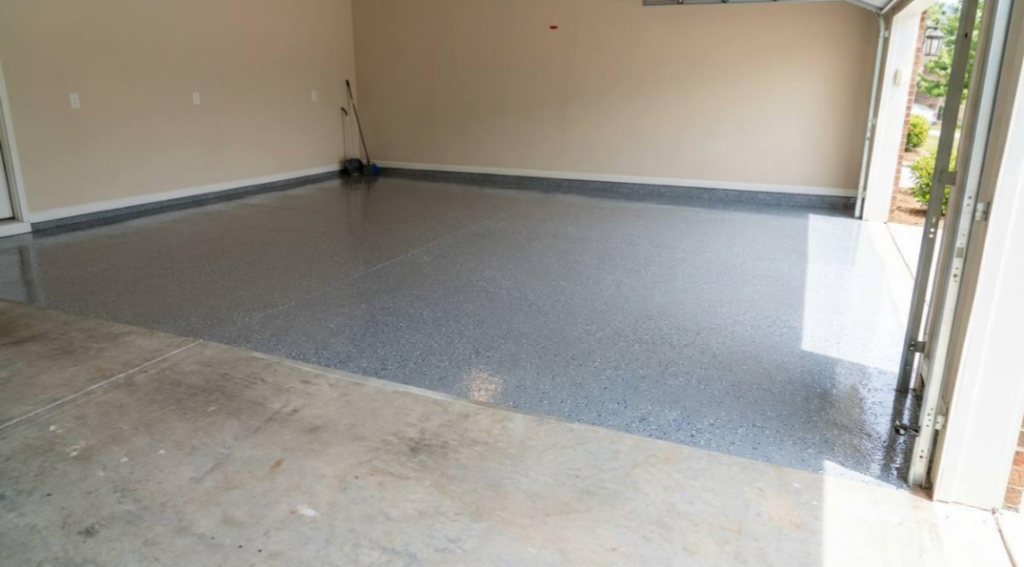
The coating you pick matters less than what’s underneath it. Concrete is porous, uneven, and often contaminated with curing compounds, oil, or tire rubber from years of use. Epoxy needs to bond into those pores, not just sit on top. When prep is skipped or rushed, the coating holds on by surface tension alone, and once vapor pushes up from Georgia’s clay soil, the bond fails from below.
Across Metro Atlanta, we’ve tracked the same pattern for years: floors that fail early are almost always rooted in two missing steps: moisture testing and mechanical profiling. Get those right, and you’ve solved most of the problems that cause coatings to bubble, yellow, or peel.
Moisture Testing Before You Grind
Georgia’s red clay soil holds water like a sponge. Even slabs poured decades ago still push vapor upward through the concrete year-round, and that vapor is the number one enemy of epoxy in this market. Before we do anything else on the slab, we run either a calcium chloride test (ASTM F1869) or an in-situ relative humidity probe (ASTM F2170) to measure how fast moisture is leaving the concrete.
If vapor emission exceeds 3 pounds per 1,000 square feet per 24 hours, a standard primer will not hold, no matter how carefully the floor is ground. In those cases, we switch to a vapor-barrier primer rated for high-moisture slabs. Skipping this test is the single biggest reason epoxy garage floor coatings delaminate during their first Georgia summer.
Diamond Grinding and the Right Surface Profile
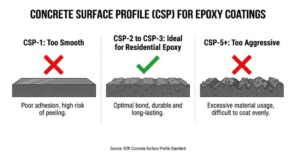
Concrete may look smooth to the eye, but its surface is too closed and dense for epoxy primer to bond to without preparation. Diamond grinding opens the surface by shaving off the top layer of laitance and exposing the aggregate underneath. The International Concrete Repair Institute rates these profiles on a scale called CSP (Concrete Surface Profile), from CSP-1 (almost smooth) to CSP-9 (heavily exposed).
For most residential garage and basement epoxy systems, CSP-2 to CSP-3 is the target: rough enough for a mechanical bite, yet smooth enough for the topcoat to lay flat. Profiles above CSP-3 are typically reserved for industrial floors, heavy-duty coatings, or surfaces that anchor thick broadcast systems, not standard residential epoxy. Being too aggressive wastes product and leaves the texture showing through the finish. Going too light creates a bond line that fails under the weight of tires.
Crack Repair, Cleanup, and the Final Inspection
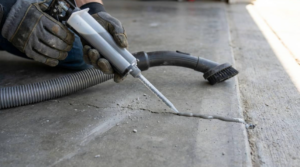
Once the slab is profiled, every crack wider than a credit card gets routed out and filled with a two-part polyurea or epoxy repair compound that cures harder than the surrounding concrete. Spalled areas and saw-cut joints are patched to a flat plane so the topcoat doesn’t telegraph the damage underneath.
The floor is then vacuumed with a HEPA-rated unit. We walk the surface one last time under a raking work light to catch oil ghosts, efflorescence, or missed grinding passes before any primer is opened. When prep is right on a garage floor coating, the primer soaks in and darkens the slab evenly. That even wet-out is how we know the floor is ready.
Frequently Asked Questions
How long does concrete prep take for a typical two-car garage?
Prep on a clean, structurally sound two-car garage usually takes one full day of grinding, moisture testing, crack repair, and vacuuming. Heavily oil-stained or previously coated floors can stretch prep to a day and a half. Atlanta Concrete Coatings always completes prep as a separate step before any primer goes down.
Can I use acid etching instead of diamond grinding?
Acid etching rarely produces a reliable profile on Georgia garage floors. It leaves residue inside the pores, can’t cut through oil-contaminated zones, and creates an inconsistent surface that often fails under vapor pressure. Mechanical diamond grinding is the industry standard for any coating expected to last more than a year or two.
Does a newly poured concrete slab still need prep before epoxy?
Yes, and usually more than homeowners expect. Fresh concrete contains curing compounds that block adhesion. It also carries more residual moisture than older slabs. New pours require at least 28 days of cure time before any coating. Proper mechanical profiling and moisture testing are still required regardless of the slab’s age.
Take the Next Step Toward a Floor That Lasts
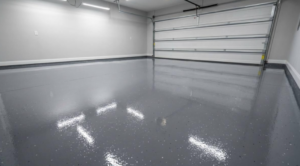
Prep isn’t the flashy part of an epoxy project, but it’s the part that decides whether your floor still looks good in five years. The decision you’re really weighing isn’t DIY versus professional; it’s short-term savings versus long-term cost. If you want the coating to hold in Georgia’s heat, humidity, and clay-driven vapor, the prep has to match the conditions.
Atlanta Concrete Coatings installs 100% solids epoxy systems across Buford, Alpharetta, Cumming, and the rest of Metro Atlanta. Book a free estimate, and we’ll assess your slab, run the moisture test, and give you an honest recommendation before any coating decision gets made.