To clean epoxy floors, sweep or dust-mop daily, damp-mop weekly with a pH-neutral cleaner, and deep-clean every one to three months using warm water and a soft-bristle brush. Atlanta Concrete Coatings recommends avoiding harsh acids, vinegar, and abrasive pads, which can etch or dull a 100% solids epoxy finish over time.
April through June is the hardest stretch of the year on Georgia epoxy floors. Pine pollen coats the surface in a yellow film that grinds into the topcoat under tires, then summer heat softens the coating just enough for hot tire pickup to start pulling at the film. The cleaning routine that worked in winter isn’t enough once spring hits. Years of maintaining garage and commercial epoxy installations across Metro Atlanta have shaped Atlanta Concrete Coatings’ recommended routine below. Here’s how you can keep your floors looking new through every Georgia season.
Daily and Weekly Cleaning Basics
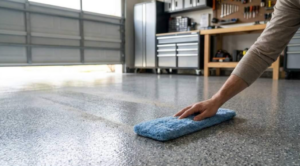
Dust, grit, and tracked-in sand do more damage to an epoxy floor than almost anything else. A soft dust mop or shop broom every day keeps abrasive particles from grinding into the topcoat when tires roll through the garage. Once a week, damp-mop with warm water and a small amount of pH-neutral cleaner using a clean microfiber mop head.
Don’t saturate the floor, and don’t use a string mop that leaves standing water around expansion joints or wall edges. This two-step routine handles most residential garage maintenance for the majority of the year. Our epoxy flooring service page covers what the topcoat can and can’t tolerate during cleaning.
Deep Cleaning: Products To Use and Avoid
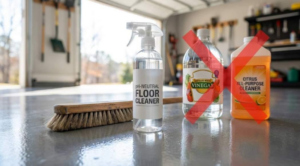
Every one to three months, or anytime the floor sees an oil spill or road salt residue, a deeper scrub is worth the effort. Warm water, a pH-neutral cleaner, and a soft-bristle deck brush lift what routine mopping leaves behind. Rinse with a garden hose or a flood-and-vac, not a pressure washer on a tight tip, which can lift the topcoat if it catches a weak edge.
Avoid vinegar, citrus cleaners, acidic tile cleaners, full-strength bleach, and concentrated Simple Green. Any of those can dull or etch a 100% solids epoxy topcoat after repeated exposure. Our commercial and residential flooring services follow the same cleaning protocol on every maintenance visit.
Spring and Summer: Pollen, Heat, and Hot Tire Pickup
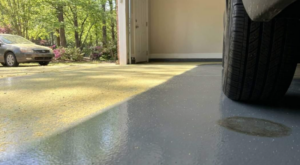
Georgia’s pollen season runs from late February through early May and coats any garage that leaves its door open even briefly. Pine pollen is slightly acidic and abrasive, so leaving it on the floor for weeks can etch the surface. Rinse at least twice a week during peak pollen season.
Summer heat is the bigger issue for anyone who pulls in and parks immediately after a long drive (before the tires have had a chance to cool down). When the topcoat climbs past 140°F and a hot tire sits on it, the soft rubber can bond to the film and pull at it when the car rolls out again. Park slightly out of the direct sun when you can, and let the tires cool for 20 to 30 minutes after arrival. We see this failure mode most often on garage floors across Metro Atlanta and North Georgia that were coated without a proper heat-rated topcoat.
Fall and Winter: Annual Inspection and Recoat Planning
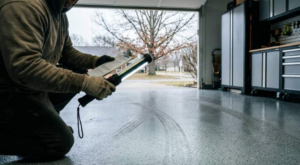
Fall is the right time to walk the floor and check for early wear. Look at the tire paths, the area where car doors open, and any spot that sees chemical exposure from gas cans or a battery maintainer. Light scratches and matte zones are normal; wear that reveals the primer beneath is a signal to recoat.
Winter in Metro Atlanta still brings road salt tracking onto garage floors more often than homeowners expect, and that salt should be rinsed off within a day or two so it doesn’t sit against the topcoat. If wear is showing, plan a clear topcoat refresh before spring pollen returns. Our concrete prep guide shows what’s involved before any new or refreshed coating.
Frequently Asked Questions
Can I pressure wash my epoxy garage floor?
Yes, at low pressure with a wide-angle tip held at least 12 inches off the surface. Keep the wand moving, never dwell on one spot, and stay away from joints and wall transitions. A 25- or 40-degree nozzle around 1,200 PSI is generally safe. Anything higher can lift the topcoat along a weak edge.
Is Dawn dish soap safe for epoxy floors?
Yes. Diluted Dawn (about a tablespoon per gallon of warm water) is one of the safest options for weekly maintenance. It’s pH-neutral enough to avoid etching and rinses clean without leaving a slippery film. For tougher spots, Atlanta Concrete Coatings recommends a dedicated epoxy cleaner rather than increasing the amount of soap.
How often should an epoxy floor be recoated?
Residential garage epoxy floors installed by Atlanta Concrete Coatings typically don’t need a recoat for 10 to 15 years with proper maintenance. High-traffic commercial floors often benefit from a clear topcoat refresh every 5 to 7 years. A fall inspection usually reveals if a recoat is needed before wear reaches the primer layer.
Simple Maintenance Habits Add Years to Your Floor
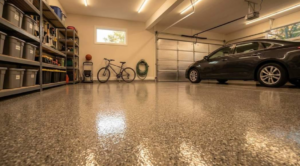
Keeping an epoxy garage floor looking new isn’t about buying expensive products. It’s about short, consistent habits that match the season: daily dust mopping, weekly damp mopping, seasonal deep cleans, and an honest fall inspection. That routine will carry a 100% solids system through a full decade without surprises. The real yearly decision is preventive care versus reactive replacement: one costs hours, the other costs thousands.
Atlanta Concrete Coatings serves homeowners and businesses across Metro Atlanta and North Georgia. Schedule a maintenance consultation, and we’ll walk your floor, assess its current wear, and plan a care calendar tailored to Georgia’s seasons.