
Garage floor epoxy vs. tile is one of the common comparison for Atlanta homeowners upgrading a bare concrete slab. Epoxy coatings typically cost $4 to $9 per square foot installed, while garage tile runs $5 to $15, depending on the material. Atlanta Concrete Coatings installs epoxy floor systems across Metro Atlanta and sees how each finish holds up to Georgia’s heat and humidity over time.
By the time most homeowners reach out, they’ve narrowed the choice to two finishes: a seamless coating or interlocking tile. Both look great in photos, but they handle Georgia’s heat and below-slab moisture very differently. Choosing wrong can mean a full redo within a few years.
This guide covers how each finish handles Atlanta’s heat, humidity, and below-slab moisture, plus how the costs compare over a 10-year window.
Cost Comparison: Epoxy vs. Tile
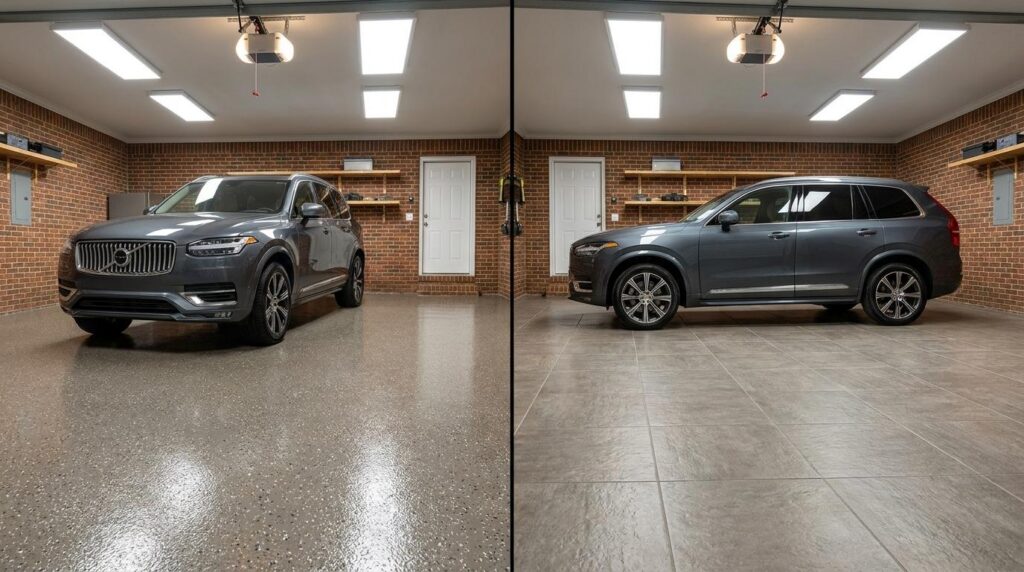
For a standard two-car garage in Atlanta (roughly 400 to 500 square feet), professional epoxy installation runs between $1,600 and $4,500. That range covers everything from a solid-color base coat to a full decorative flake system with a clear topcoat. Premium options like metallic epoxy sit at the top of that range.
Interlocking garage tile costs more upfront. Porcelain or PVC tile systems run $5 to $15 per square foot installed, putting the same garage at $2,000 to $7,500 or higher. Subfloor prep, adhesive, and grout push that total even further on older Atlanta slabs that need leveling.
Epoxy also carries lower long-term costs. There’s no grout to reseal, no individual tiles to replace, and no expansion gaps collecting dirt and moisture. Over a 10-year window, the maintenance savings alone can close the gap between a mid-range tile job and a premium epoxy system.
Durability and Moisture Performance in Atlanta
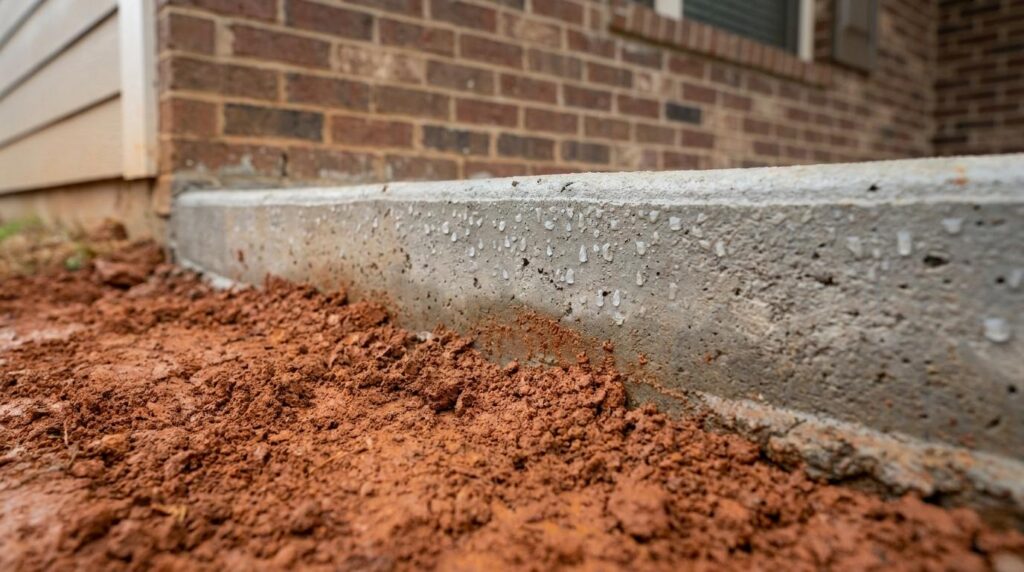
Georgia’s red clay soil holds water and pushes moisture vapor upward through concrete slabs year-round. That vapor pressure is the single biggest reason garage floor finishes fail across Metro Atlanta and North Georgia, from older neighborhoods in Decatur to newer builds in Cumming and Alpharetta.
How Moisture Affects Each Surface
Epoxy installed over a properly tested slab with a vapor barrier primer seals the surface and blocks that transmission. Tile can’t match that protection. Grout lines absorb moisture from below, and hydrostatic pressure loosens adhesive bonds over time. Tiles pop, crack, or grow mold underneath without any visible warning. Even premium porcelain tile installed over an untested Atlanta slab faces this risk.
Hot Tire Resistance
Atlanta summers push tire temperatures high enough to cause “hot tire pickup,” where cooling tires bond to a coating and pull it off the slab. Thin DIY epoxy and rigid tile are most vulnerable. A professionally installed 100% solids epoxy system with proper surface prep is substantially more resistant, though some hot-tire risk exists with any epoxy in extreme conditions. Most garage tile systems have no documented hot-tire rating at all.
Installation and Long-Term Maintenance
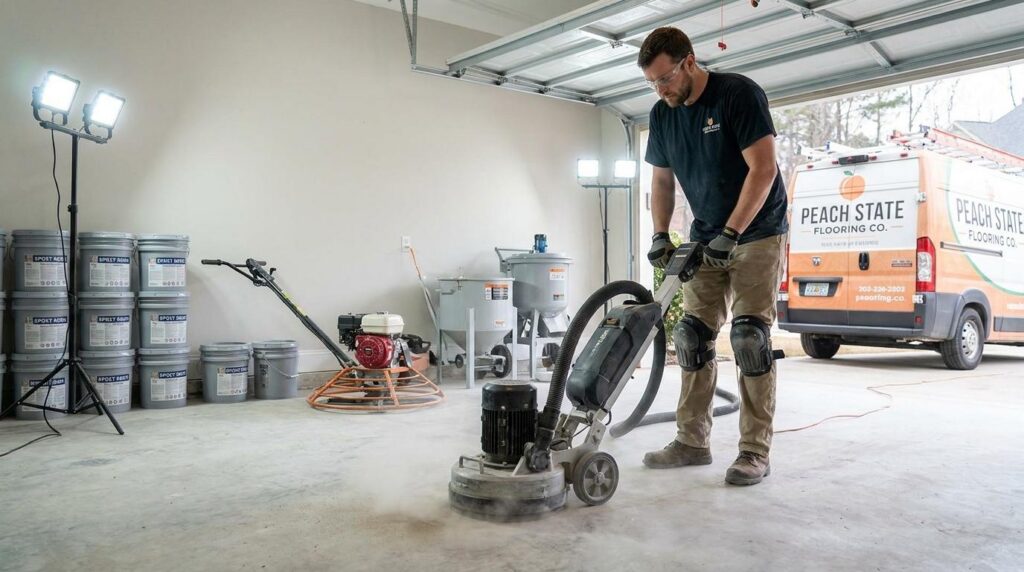
Professional epoxy installation typically takes one to two days, with full cure in 48 to 72 hours. Surface preparation includes diamond grinding, crack repair, and mandatory moisture testing before any coating goes down. Skipping any of those steps in Georgia’s climate invites early failure.
Tile installation takes longer. A 500-square-foot garage often needs two to four days for layout, adhesive curing, and grout work.
Day-to-day upkeep is where epoxy pulls further ahead:
- Epoxy: Sweep weekly, mop with a mild cleaner monthly, inspect annually
- Tile: Clean and reseal grout every one to two years, replace cracked tiles individually, manage expansion gap debris
A professionally installed epoxy floor in Atlanta can perform for 15 to 20 years before needing a recoat. Tile grout in Georgia’s humidity often starts breaking down within five to seven years.
Frequently Asked Questions
Can you install tile over an existing concrete garage floor?
You can, but the concrete must be level, clean, and free of moisture issues first. In Atlanta, where below-slab moisture vapor is common, skipping a moisture test before tiling often leads to adhesive failure within a few years. Testing the slab is essential regardless of which finish you choose.
Is epoxy flooring slippery when wet?
Standard epoxy has a smooth finish that can be slick when wet. Atlanta Concrete Coatings adds anti-slip additives to the topcoat for garage applications, giving the surface enough grip for wet shoes and car tires without sacrificing the glossy appearance homeowners want.
How long does it take to use the garage after epoxy installation?
Light foot traffic is safe after 24 hours, and vehicles can go back on the surface after 48 to 72 hours. Full chemical cure takes about seven days. Most Atlanta homeowners plan installation around a long weekend so the garage is ready by Monday.
Which One Belongs in Your Atlanta Garage?
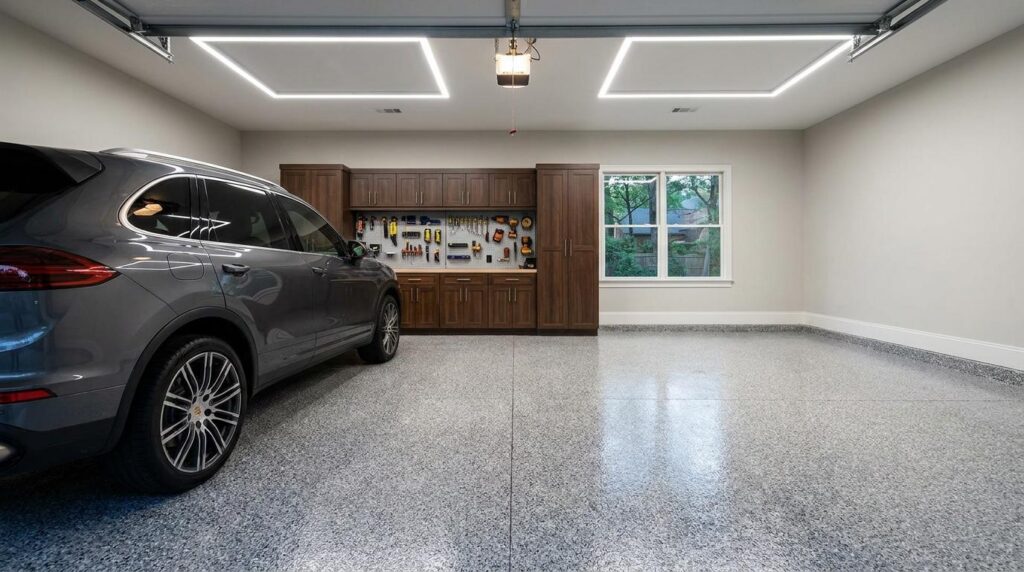
Epoxy outperforms tile on cost, moisture resistance, and long-term maintenance in Atlanta’s climate. If your garage sits on a concrete slab over Georgia clay, a 100% solids epoxy system with proper moisture testing gives you the longest-lasting, lowest-maintenance result.
Tile works in specific situations like climate-controlled showrooms or detached workshops without below-slab moisture concerns. For most attached garages across Metro Atlanta and North Georgia, a sealed seamless surface is the stronger long-term choice.
Contact Atlanta Concrete Coatings today to book your free estimate, or call (770) 626-4524 to discuss which system fits your garage.