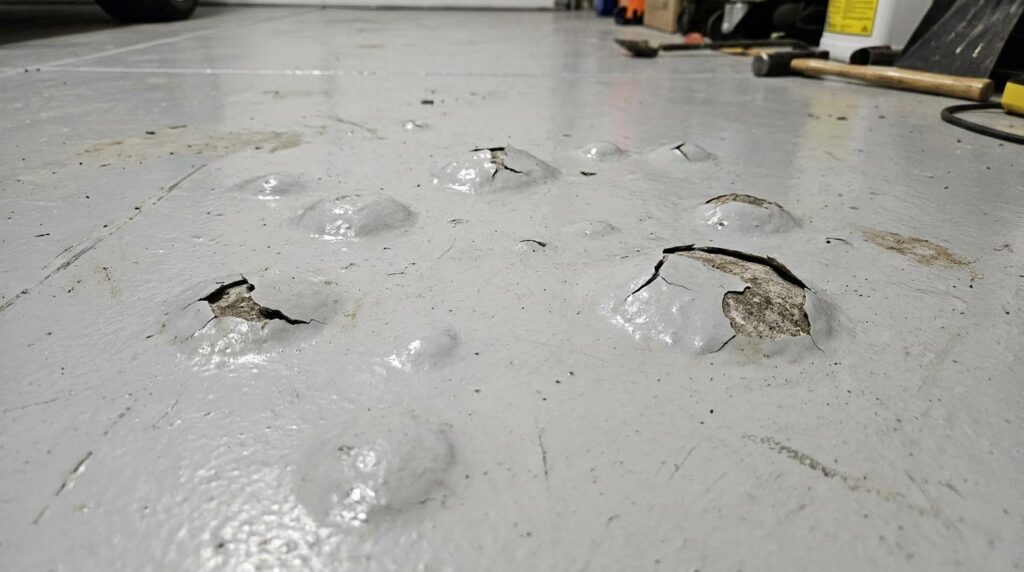
Epoxy floor bubbling happens when trapped moisture or air pushes through the concrete and gets caught under the cured epoxy coating. The bubbles aren’t a sign of a defective product. They’re a sign the slab wasn’t properly tested before application. Atlanta Concrete Coatings sees this pattern repeatedly across Metro Atlanta garages and basements.
Most homeowners who call about bubbling assume the epoxy failed. The coating is usually fine. The real problem started before the first drop touched the floor, and it almost always traces back to what’s happening underneath the slab. This guide breaks down what causes epoxy bubbling, how to fix it depending on the severity, and the prep work that prevents it from happening in the first place.
Moisture Vapor: The Most Common Cause of Bubbling
Georgia’s red clay soil retains water year-round and pushes moisture vapor upward through concrete slabs. When an impermeable coating seals the surface, that vapor has nowhere to go. Pressure builds under the epoxy, and the coating blisters or lifts.
Why Atlanta Slabs Are Especially Vulnerable
Georgia clay holds more water than the sandy or loam soils found in other parts of the Southeast. Combined with Metro Atlanta’s over 70% average humidity, concrete slabs here face moisture pressure from both above and below. That makes this region one of the highest-risk markets for coating failure due to vapor transmission.
How to Test Before Coating
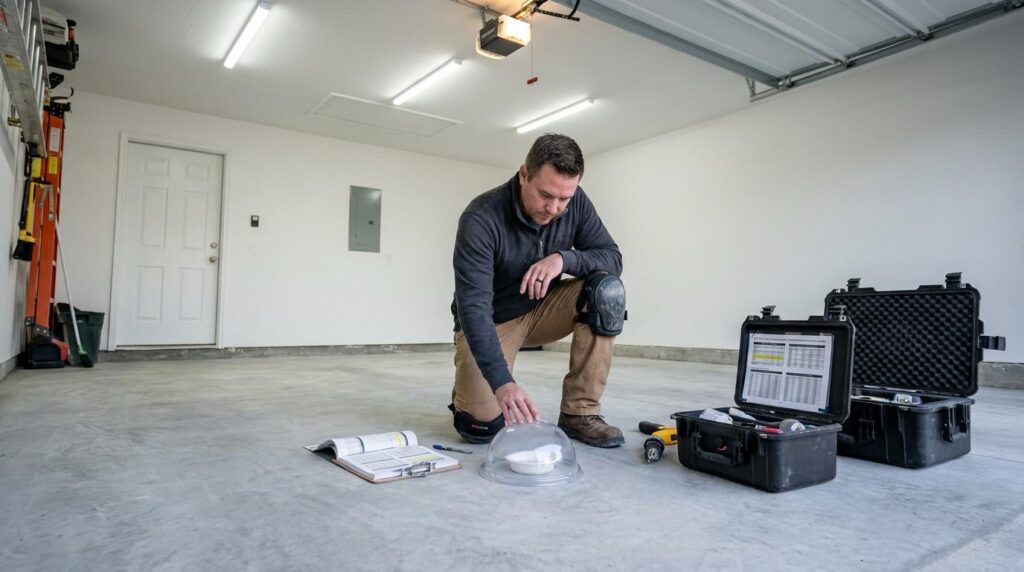
Industry-standard calcium chloride tests (ASTM F1869) and relative humidity probes (ASTM F2170) measure vapor levels inside the concrete. If readings exceed safe thresholds, a vapor barrier primer goes down first. Without that step, even the highest-quality epoxy will eventually bubble.
Other Causes of Epoxy Floor Bubbling
Moisture is the most frequent culprit, but it’s not the only one. Several other factors produce the same bubbling symptom.
Concrete Outgassing
Air trapped inside the slab escapes as the epoxy cures, especially if the concrete hasn’t fully dried after cleaning or pressure washing. Outgassing creates small pinholes or surface bubbles in the finished film. Applying epoxy to a damp slab or during rapid temperature swings makes it worse.
Surface Contamination
Oil, grease, silicone residue, or old sealer left on the concrete prevents the epoxy from bonding cleanly. The coating appears to cure but later bubbles or peels where contaminants blocked adhesion.
Improper Surface Preparation
Skipping mechanical diamond grinding or relying on acid etching alone leaves the concrete pores too closed for a strong bond. Without a proper surface profile, the epoxy sits on top of the slab rather than locking into it.
How to Fix and Prevent Epoxy Floor Bubbling
How you fix bubbling depends on severity:
- Minor surface pinholes: Sand the affected area smooth, clean thoroughly, and apply a fresh topcoat. This works only when adhesion underneath is still solid.
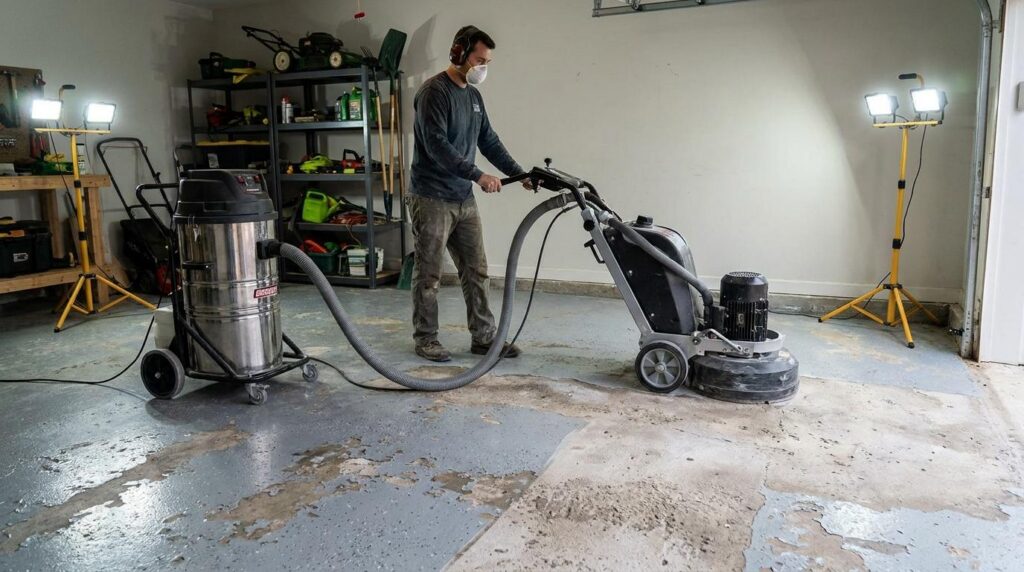
- Large blisters or widespread delamination: The coating must be stripped to bare concrete. The slab gets retested for moisture, reground, and recoated with the correct primer and epoxy system. There’s no shortcut for this level of failure.
Prevention costs less and lasts longer than any repair. A qualified installer tests the slab, profiles it with diamond grinding, and selects the correct primer based on moisture readings. In Atlanta’s conditions, 100% solids epoxy with a vapor barrier primer eliminates most bubbling risk before installation begins. The prep work takes a few extra hours but saves years of problems.
Frequently Asked Questions
Will epoxy floor bubbles go away on their own?
No. Once the coating cures with bubbles trapped underneath, they’re permanent. Small pinholes can sometimes be sanded and recoated, but large blisters indicate an adhesion failure that requires stripping and recoating the affected area from bare concrete.
Can I apply new epoxy over a previously bubbled floor?
Not without removing the failed coating and fixing the root cause first. If moisture vapor caused the original bubbling, layering new epoxy on top will produce the same result. The old coating must come off and the slab must be retested.
How does Atlanta Concrete Coatings prevent bubbling?
Every project, whether in a Sandy Springs basement or a Woodstock garage, starts with a mandatory moisture vapor test and diamond grinding of the concrete surface. If vapor levels exceed safe thresholds, a vapor barrier primer goes down before the base coat. That process eliminates the conditions that cause bubbling in the first place.
Fix the Problem at the Source
Epoxy floor bubbling is almost never a product failure. It’s a preparation failure. Moisture vapor, outgassing, contamination, or inadequate surface prep create the conditions long before the coating goes down.
Minor bubbling can often be sanded and recoated. Severe delamination requires stripping the floor back to bare concrete and starting over. In both cases, the repair only lasts if the root cause (vapor, contamination, or inadequate prep) has been fixed first.
Whether your epoxy floor has already started bubbling or you want to prevent it on your next install, start with a professional slab assessment. Contact Atlanta Concrete Coatings to schedule a free evaluation, or call (770) 626-4524 to talk through your situation.