
For most Atlanta garages, the choice between epoxy and polyaspartic comes down to two things: epoxy costs less ($4 to $9 per square foot) but takes two to three days to cure, while polyaspartic costs more ($5 to $12 per square foot) but installs in a single day and won’t yellow in the sun. Both are professional-grade coatings that far outlast any consumer floor paint; they just differ in price, cure time, and UV stability.
That trade-off, not which chemistry is “better,” is what should drive the decision. Resolving the epoxy vs. polyaspartic dilemma depends on how you use your garage and how soon you need it back. Atlanta Concrete Coatings installs both concrete coatings across Metro Atlanta. We recommend flooring solutions based on the slab, the sun exposure, and your timeline. Let’s review what each coating delivers in terms of cost, installation speed, durability, and UV performance so you can decide based on what actually matters for your garage.
What Separates Epoxy From Polyaspartic?
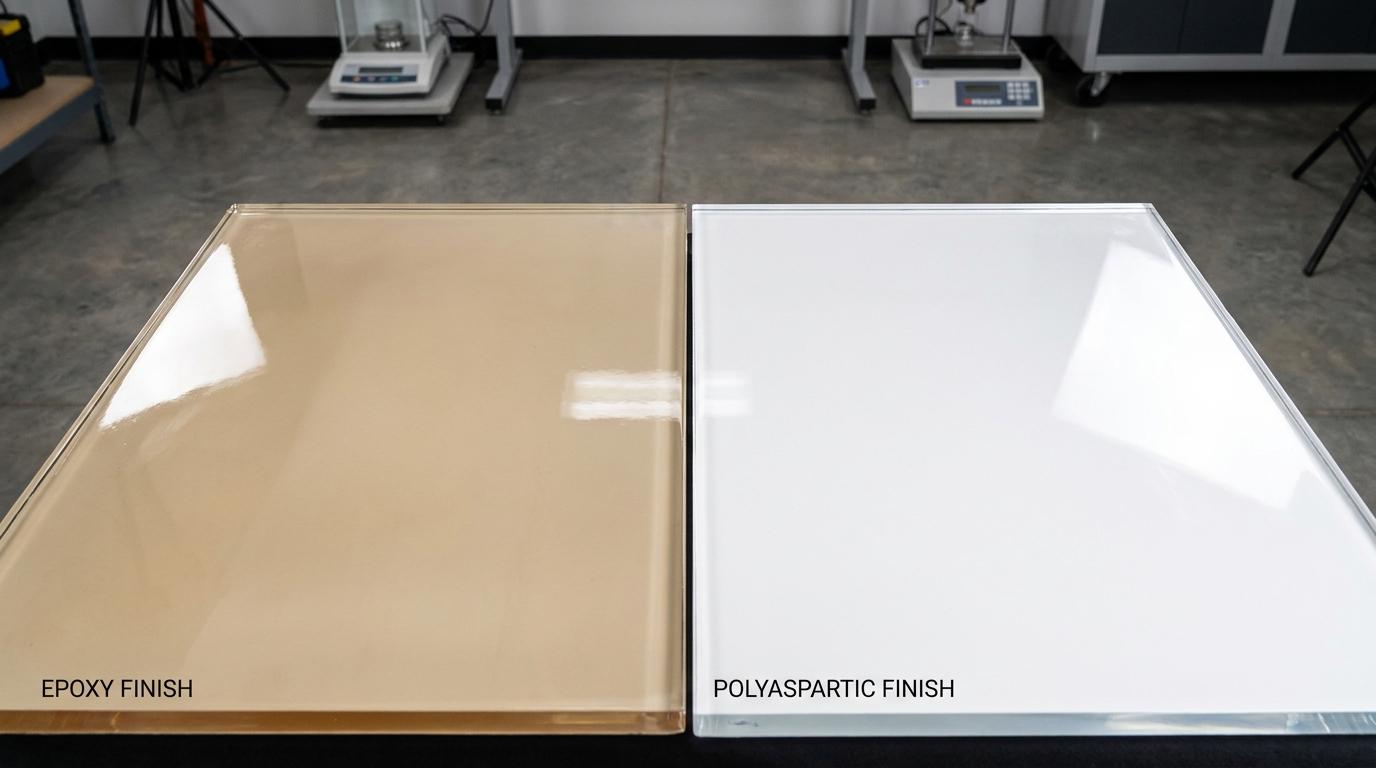
To choose the right floor for your space, it’s helpful to understand the chemical differences that drive performance, cure times, and long-term durability for these two materials.
Epoxy: The Established Standard
Epoxy is a two-part thermoset resin that cures through a chemical reaction between resin and hardener. It bonds well to concrete, builds to a thick durable film, and costs less than alternatives. The trade-off: standard epoxy garage floors cure slowly, requires 12 to 24 hours between coats, and the amines in the formula yellow under UV over time.
Polyaspartic: The Faster, UV-Stable Alternative
Polyaspartic is a newer aliphatic polyurea chemistry. It cures faster, sometimes under an hour per coat, and the chemistry is inherently UV-stable, so it won’t yellow even in a garage with south-facing windows. Polyaspartic also bonds at a wider temperature range, which matters in unconditioned Georgia garages. The downside is cost: polyaspartic typically runs $5 to $12 per square foot versus epoxy’s $4 to $9.
Installation Timeline: One Day vs. Three
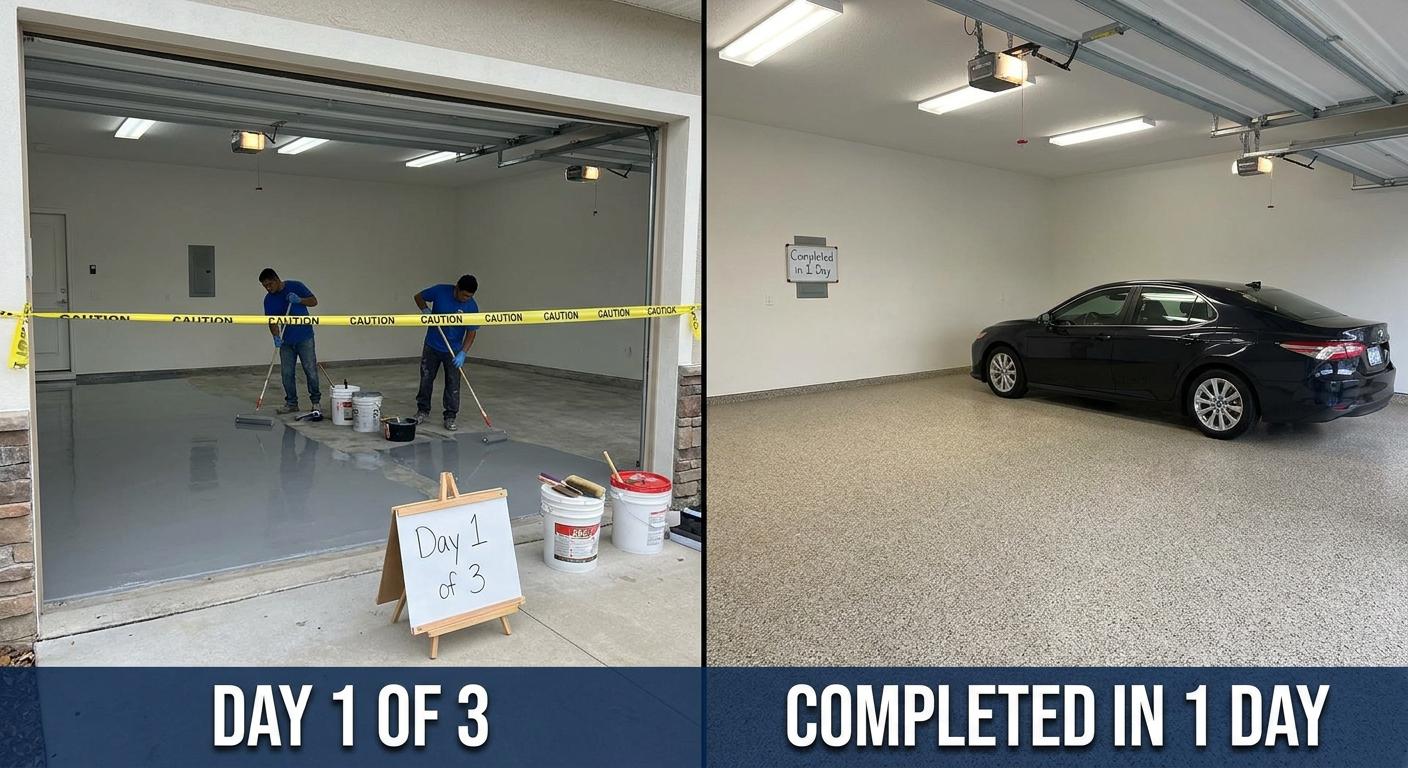
An epoxy system with the same number of layers takes two to three days, because each coat needs 12 to 24 hours to cure before the next goes on. For a homeowner who uses the garage daily, that’s a real difference. In fact, it’s the deciding factor for a lot of Alpharetta families who can’t give up their garage for a long weekend, so they choose polyaspartic for the single-day turnaround. For new construction or a garage that can sit empty for a few days, the longer epoxy cure isn’t a drawback at all. The extra days change the schedule, not the finished floor.
Durability and UV Performance in Georgia Conditions
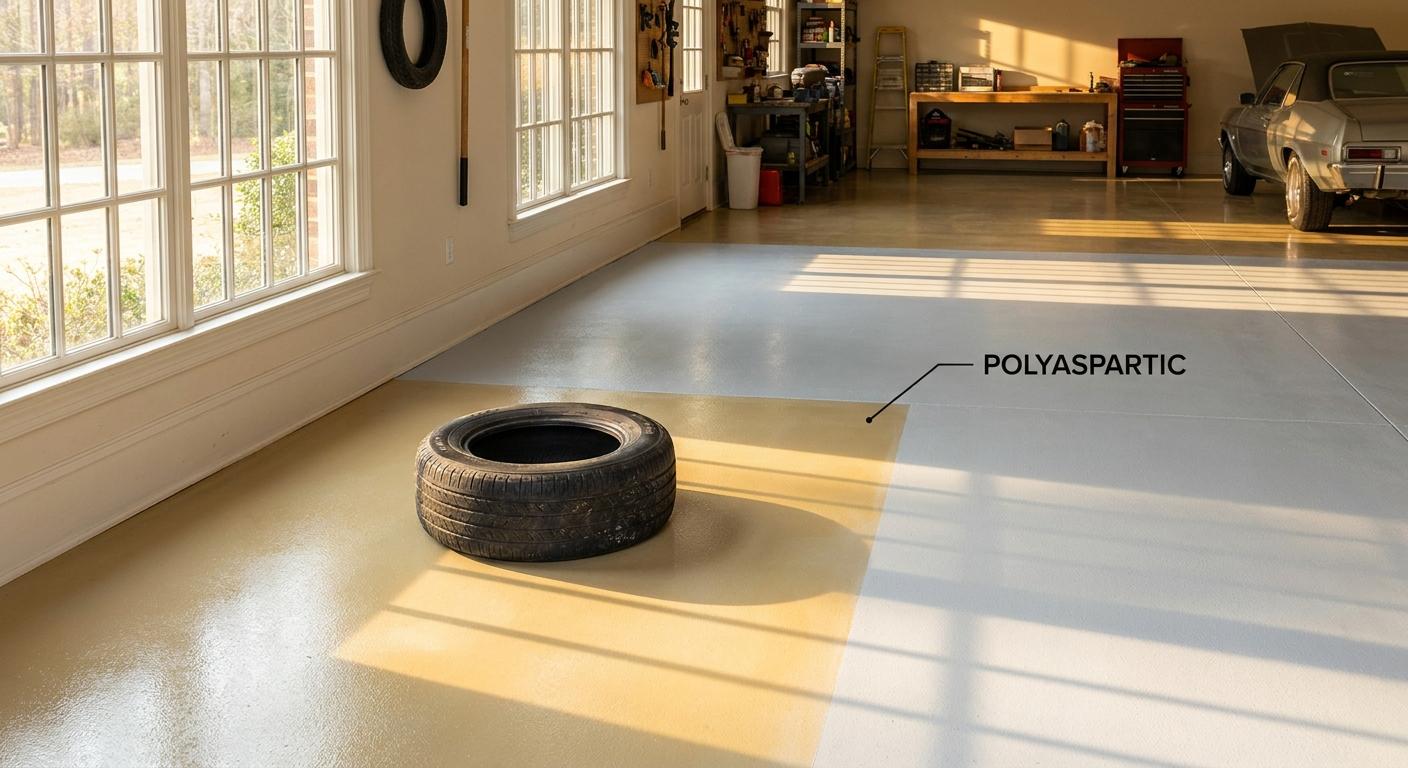
Beyond aesthetics, the true test of a garage floor coating in Georgia is how it holds up against extreme heat, daily wear, and intense sunlight.
Chemical, Abrasion, and Impact Resistance
Both coatings resist chemicals, abrasion, and impact far above consumer-grade floor paints. Polyaspartic has a slight edge in flexibility, handling the thermal expansion and contraction of a garage slab better over time, and a clear advantage in UV stability. A light-gray polyaspartic floor looks the same in year ten as on day one. Standard epoxy in a sunny garage will show ambering by year three to five unless topped with a UV-stable clear coat.
Hot-Tire Resistance in Atlanta Summers
Hot-tire resistance, critical in Atlanta where summer pavement temperatures exceed 140 degrees Fahrenheit, is comparable between the two when each is formulated with a high-performance topcoat. A cheap polyaspartic without the right topcoat can hot-tire-pickup as easily as cheap epoxy. The chemistry matters less than whether the contractor spec’d the right topcoat for the climate. Serving Metro Atlanta and North Georgia homeowners, Atlanta Concrete Coatings applies hot-tire-resistant topcoats as standard regardless of base chemistry.
Which Coating Is Right for Your Garage?
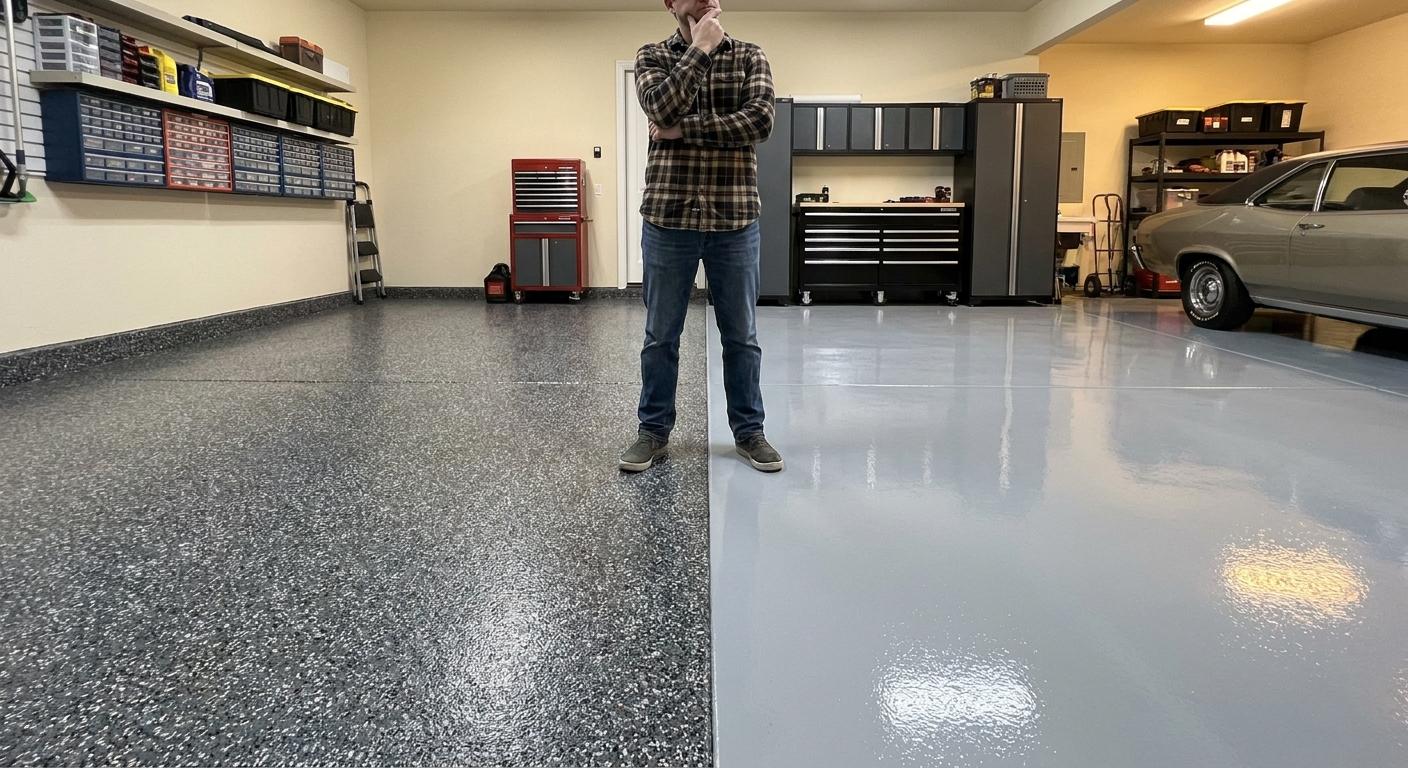
To help you make the right choice for your specific project, here’s a quick breakdown of how to weigh your budget, timeline, and requirements.
- Choose epoxy if budget is the priority and the garage has limited direct sun, you’ll save $1 to $3 per square foot and get the same durability
- Choose polyaspartic if you need the garage back in one day or the floor gets heavy UV exposure from windows or an open door
- Both coatings perform equally well on moisture-tested, diamond-ground slabs, neither one compensates for skipped prep work
- Either way, insist on a UV-stable, hot-tire-resistant topcoat, this single spec decision matters more than the base chemistry
The honest answer: for most Atlanta garages, both coatings work. The decision comes down to timeline, UV exposure, and if the upfront cost of the concrete floor coating fits your budget. What doesn’t change is the prep work, moisture testing, diamond grinding, and a multi-layer build are non-negotiable regardless of which chemistry you pick.
Frequently Asked Questions
Is polyaspartic always better than epoxy for garage floors?
Polyaspartic wins on cure speed and UV resistance, making it stronger for garages with direct sun or homeowners needing the space back in one day. Epoxy wins on upfront cost and decades of proven performance. For a garage with limited UV and a flexible timeline, an epoxy system with a UV-stable topcoat delivers the same durability for less money.
Can polyaspartic be applied over an existing epoxy floor?
Yes, polyaspartic can be applied over existing epoxy as a UV-stable topcoat, one of its most common uses. The existing epoxy must be sound, clean, and well-bonded; peeling or bubbling must be addressed first. A light sanding or diamond buff opens the surface, and the polyaspartic clear coat goes on as the new wear layer.
How much more does polyaspartic cost than epoxy in Atlanta?
Polyaspartic coatings cost $1 to $3 more per square foot than comparable epoxy systems in Atlanta. On a standard two-car garage of 400 to 500 square feet, that is a $400 to $1,500 difference. The premium buys faster installation and permanent UV stability.
Pick the Chemistry That Works for Your Garage
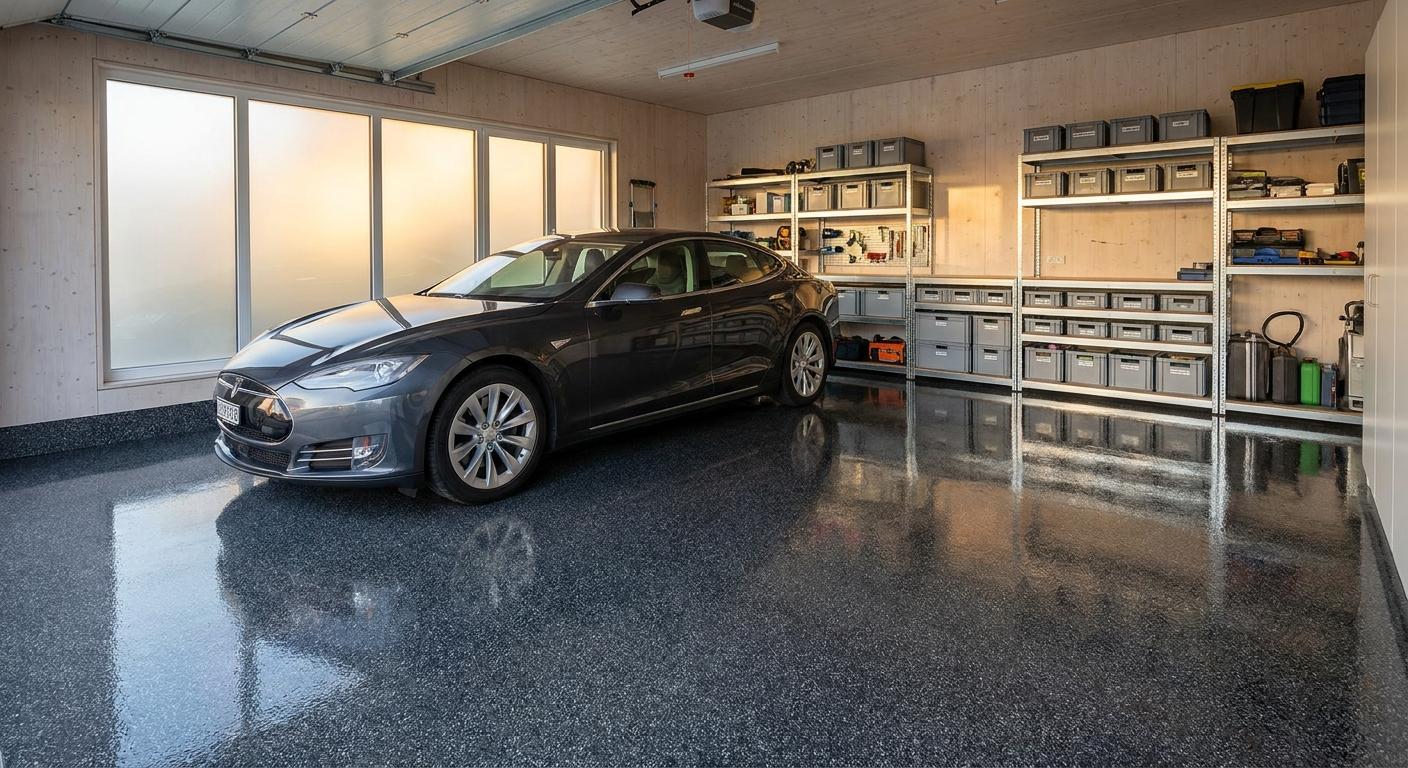
The epoxy-vs-polyaspartic decision comes down to three questions: How much sun hits your garage floor? How soon do you need the space back? And does the $1-to-$3-per-square-foot premium fit your budget? Answer those, and the right chemistry is clear. Both coatings, installed over a properly prepped slab with the right topcoat, will outlast every car you park on them.
For Metro Atlanta homeowners weighing both options, Atlanta Concrete Coatings provides free on-site estimates with a specific recommendation based on your garage, your timeline, and your budget. Call (770) 626-4524 or book your free estimate online.