
The choice between grind and seal and polished concrete comes down to one question: how will the floor actually be used? Both start from the same bare slab, but they involve different processes. Grind and seal puts a protective sealer over a ground slab for moisture and stain resistance at $2 to $6 per square foot. Polished concrete mechanically refines the slab itself into a glossy, durable surface that needs no coating at all, at $3 to $12 per square foot.
One is a topical layer you’ll maintain; the other is a permanent surface you won’t. Atlanta Concrete Coatings offers concrete polishing as well as grind and seal services across Metro Atlanta. Our recommendation depends entirely on traffic, moisture, and how much downtime you can afford for future upkeep. Join us as we compare the two on cost over time, durability, and the best spaces for each finish.
What Is Grind and Seal?
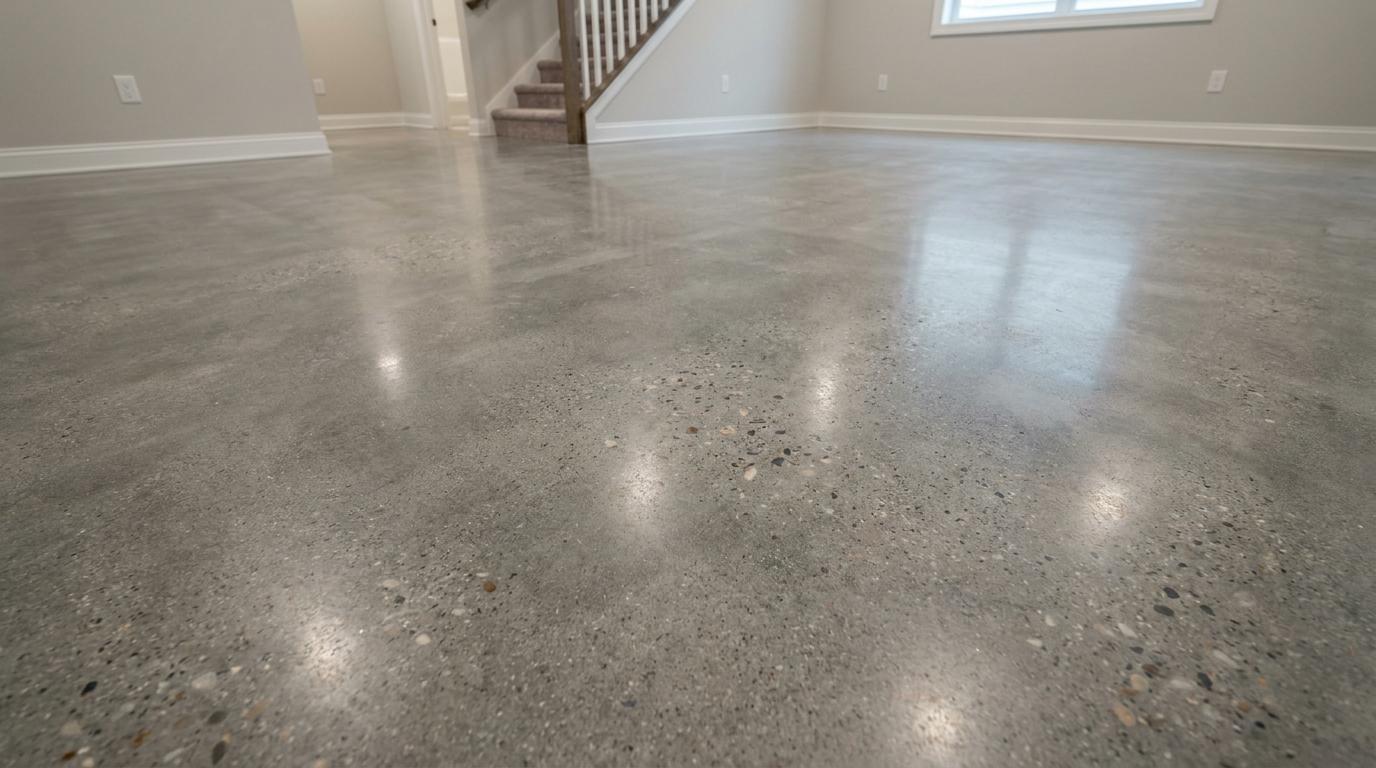
Grind and seal starts with diamond grinding to level the surface and expose aggregate, then applies a penetrating sealer or topical coating. The sealer sits on top of the concrete, it protects against moisture and stains but is a wear layer that dulls, scratches, and needs reapplication every 3 to 7 years. At $2 to $6 per square foot, it is the more affordable option upfront and preserves the concrete’s natural gray look.
What Is Concrete Polishing?
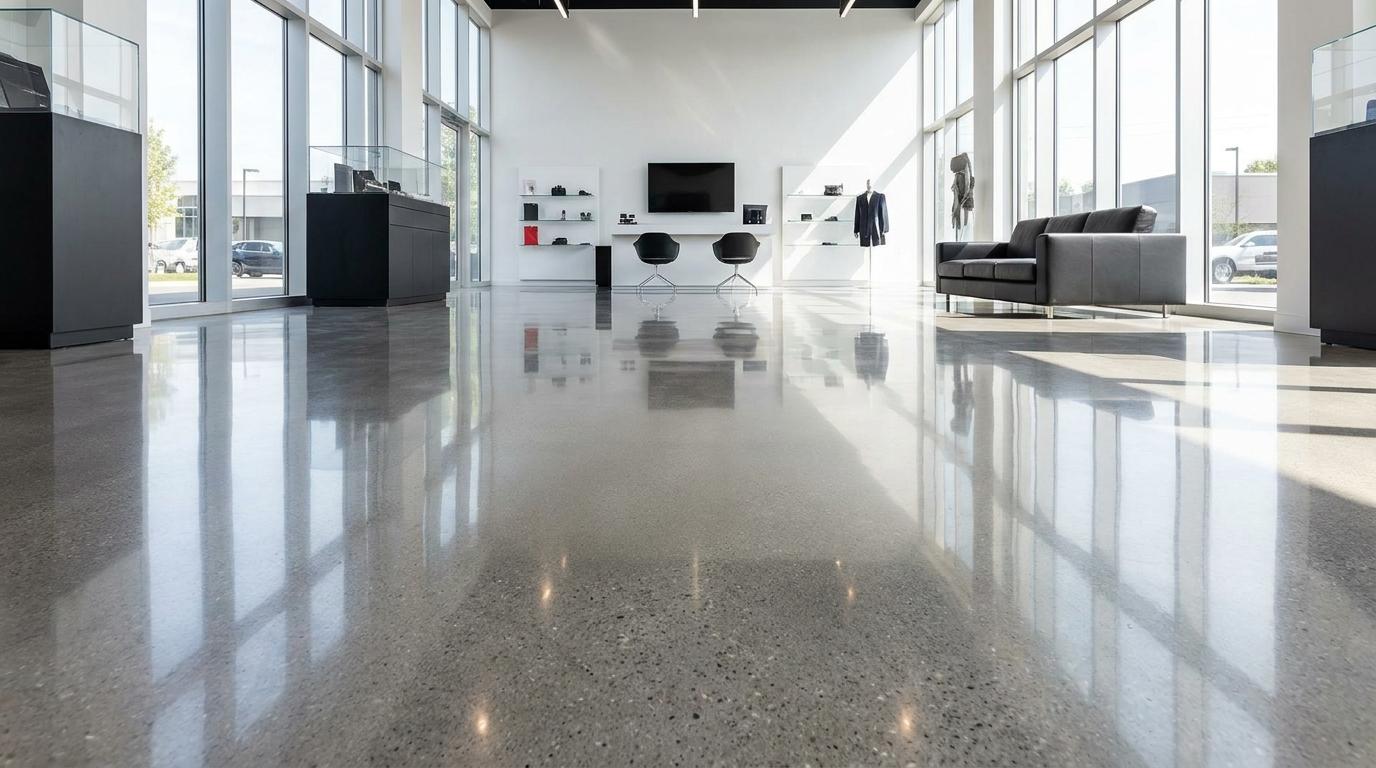
Polished concrete goes further, the slab is refined through progressively finer grits and treated with a chemical densifier that hardens it from within. The surface is polished, not coated: there is nothing to peel, flake, or reapply. At $3 to $12 per square foot, the upfront cost is higher, but a polished floor never needs resealing. Atlanta Concrete Coatings polishes concrete for basements, retail showrooms, warehouses, and any space where a permanent low-maintenance floor earns its keep.
The Real Cost Difference Over Time
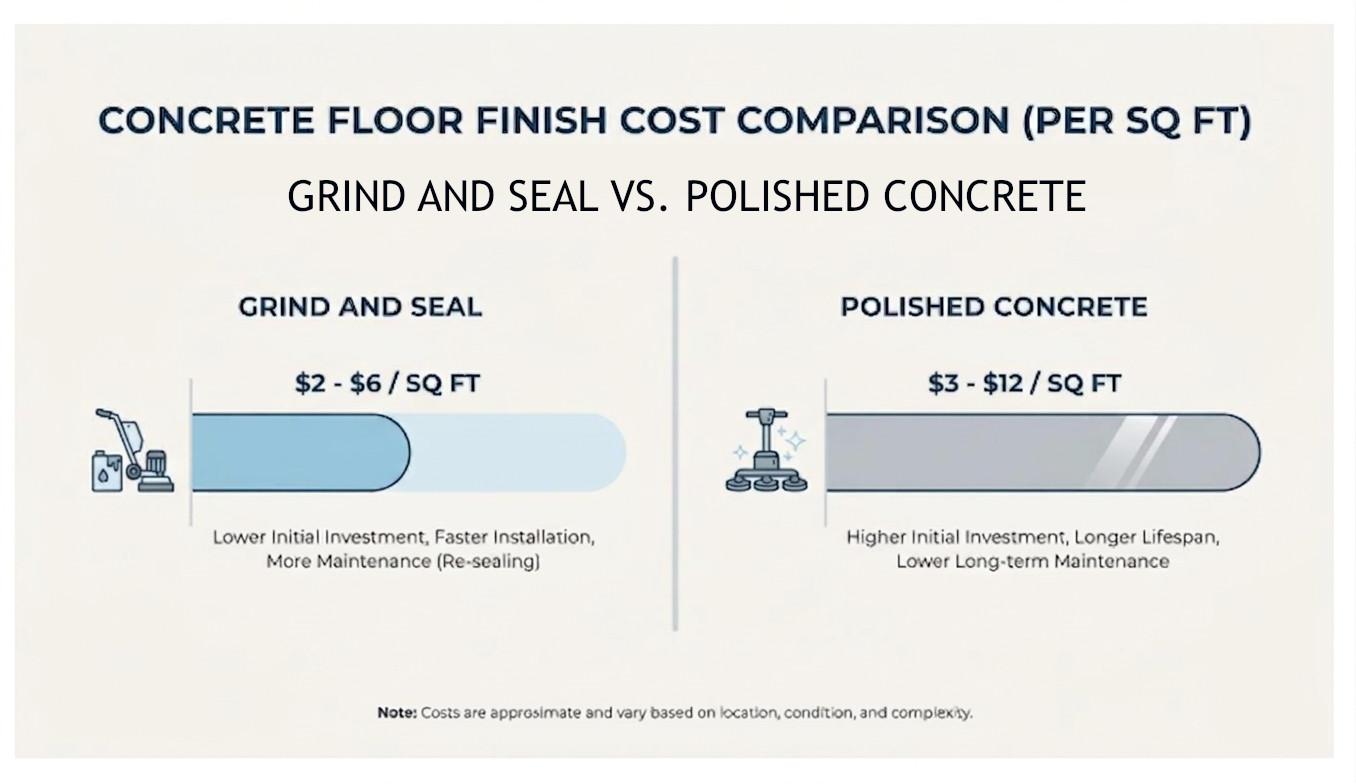
The upfront price ranges overlap: grind and seal at $2 to $6, polished at $3 to $12 per square foot, but the lifetime comparison changes how much you’ll spend. A grind and seal resealed every five years over 15 years adds two to three reseal cycles to the total. A polished floor costs more on day one but nothing more on day 3,000. We’ve run this math for plenty of Duluth retail and warehouse owners, where a facility that can’t easily close for resealing every few years makes polished concrete the cheaper choice over a decade despite the higher install price.
Durability and Maintenance: Day to Day
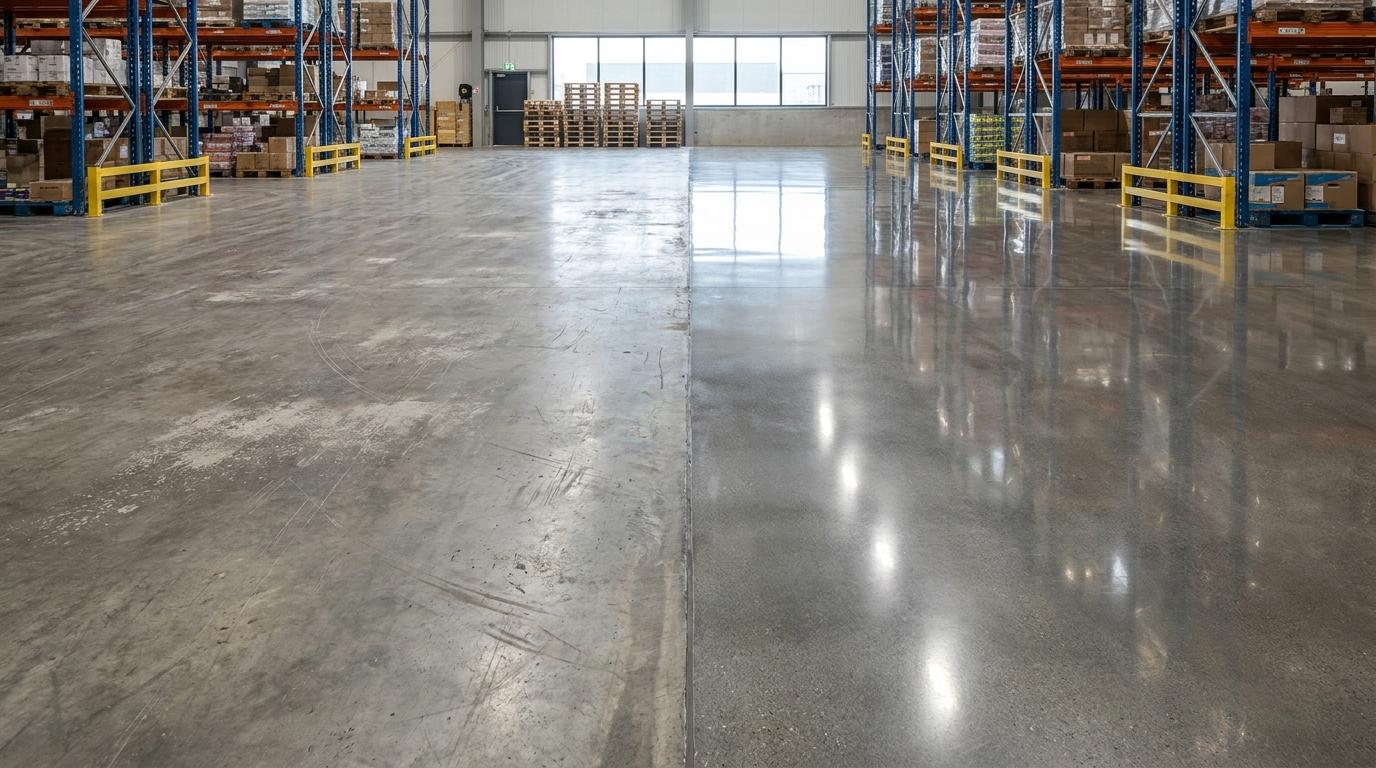
Polished concrete resists stains and moisture at a molecular level. The densifier fills the concrete’s pores, so liquids cannot penetrate. Maintenance is dust-mopping and occasional damp mopping. A grind and seal floor resists stains well while the sealer is intact, but scratches, dulls, and eventually fails if not recoated.
In Atlanta, Georgia clay soil drives moisture vapor upward through slabs. A grind and seal relies on the sealer to block that vapor. If it fails, the coating delaminates. In contrast, polished concrete has no topical layer that can delaminate. Atlanta Concrete Coatings serves the Metro Atlanta area and evaluates moisture before recommending any finish.
Which One Fits Your Space?
Grind and seal fits residential basements, low-traffic retail, and homeowners who want the exposed-aggregate look at a lower price point with periodic resealing factored in. Polished concrete is the better choice for high-traffic commercial spaces, warehouses, and any floor that takes heavy wear. For garage floors, epoxy and polyaspartic coatings provide better chemical resistance and a warmer finished look. And Atlanta Concrete Coatings installs those as well.
Frequently Asked Questions
How long does a grind and seal floor last before resealing?
A grind and seal floor typically needs resealing every 3 to 7 years, depending on traffic and whether the sealer is a penetrating silane or a topical acrylic-urethane. Penetrating sealers degrade from within the concrete and last longer. Topical sealers wear from the surface down and show visible dulling sooner. Atlanta Concrete Coatings assesses wear during each estimate and recommends the reseal interval for your specific floor.
Is polished concrete slippery when wet?
Polished concrete isn’t inherently slippery, but high-gloss finishes can become slick when wet. The coefficient of friction can be adjusted during polishing. Stopping at a lower grit produces a matte or satin finish with more grip. For commercial kitchens, pool decks, and entryways, a matte polish with an anti-slip additive provides traction without sacrificing the durability benefits of a polished floor.
Can you polish concrete that already has a sealer or coating on it?
Concrete with an existing coating, sealer, or paint must be stripped to bare concrete before polishing. The old material is diamond-ground off completely, then the slab proceeds through the standard polishing sequence. This adds cost and time, but the end result is the same. Atlanta Concrete Coatings evaluates existing coatings during the estimate and factors removal into the quote.
Choose the Right Finish for Your Concrete
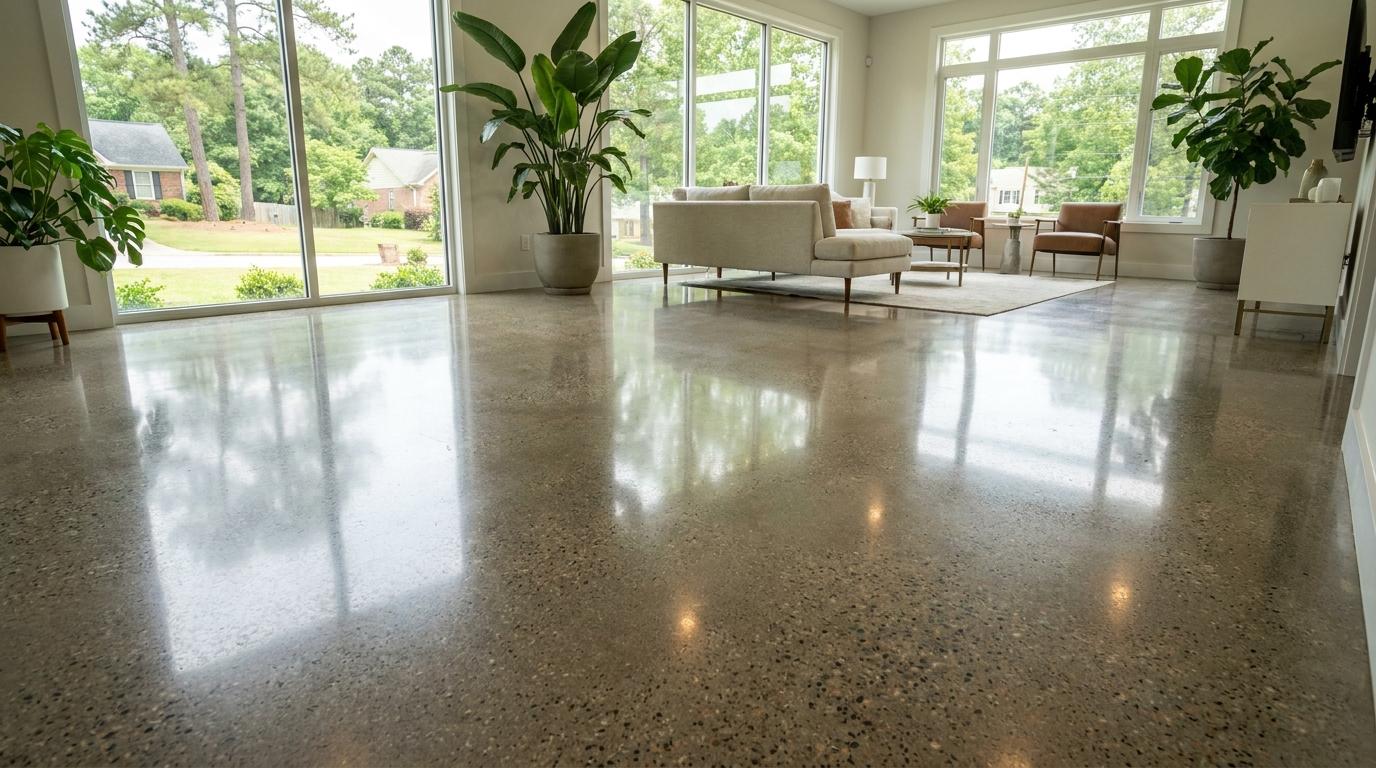
Both finishes start with a grinder and a bare slab. Grind and seal delivers a protected surface at a lower upfront cost, with periodic resealing built into the long-term plan. Polished concrete costs more on day one but earns it back through decades of zero-maintenance durability. The right answer depends on traffic, moisture exposure, and whether the floor can be taken offline for resealing every few years.
Atlanta Concrete Coatings provides free estimates for grind and seal, polished concrete, and epoxy coating systems across Metro Atlanta and North Georgia. Contact us today at (770) 626-4524 for a slab evaluation and a recommendation based on how you use your floor.