Epoxy floor maintenance comes down to regular sweeping and occasional mopping with a mild cleaner. A professionally installed epoxy floor in Atlanta can last 15 to 20 years with basic upkeep, but Georgia’s pollen, summer heat, and humidity create conditions that demand a few region-specific care habits. Atlanta Concrete Coatings fields these maintenance questions every spring from homeowners across Metro Atlanta, and most have simple fixes once they know what to look for.
A homeowner in Cumming called two years after installation, worried that a cloudy haze meant the coating was failing. It was pollen buildup from leaving the garage door open during spring. One pass with a damp mop cleared it. This guide covers the daily and weekly habits that keep epoxy floors looking new, plus the seasonal adjustments that matter most in Atlanta’s climate.
Daily and Weekly Cleaning Basics
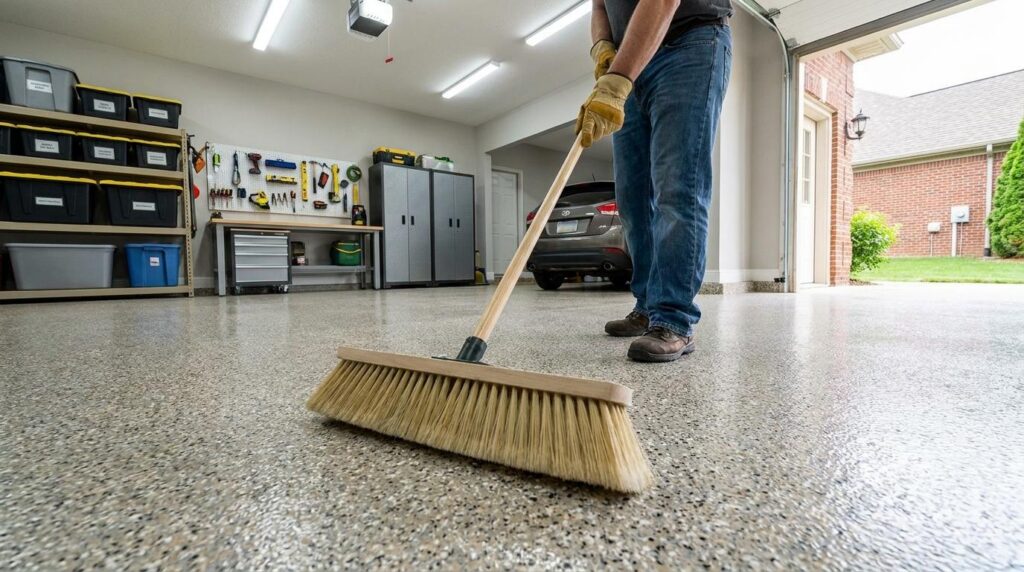
With just a few habits performed regularly, maintaining your epoxy floor can be simple and effective.
Sweeping and Dust Mopping
Sweep or dust-mop the floor two to three times per week to remove grit, sand, and debris. Those small particles act like sandpaper under foot traffic and gradually dull the topcoat. For garages with decorative flake or textured finishes, a soft-bristle push broom works better than a flat dust mop because the texture traps fine particles that a flat mop glides over.
Mopping and Spill Cleanup
Mop the floor every two to four weeks with warm water and a few drops of dish soap or a pH-neutral floor cleaner. Avoid ammonia-based or citrus-based cleaners, which can degrade the topcoat’s chemical bond over time.
Spills should be wiped up promptly. Epoxy resists stains from oil, gasoline, and most garage chemicals, but letting corrosive fluids sit for hours can eat into even a professional-grade topcoat. A quick wipe with a shop rag handles most spills before they become a problem.
Seasonal Care for Atlanta’s Climate
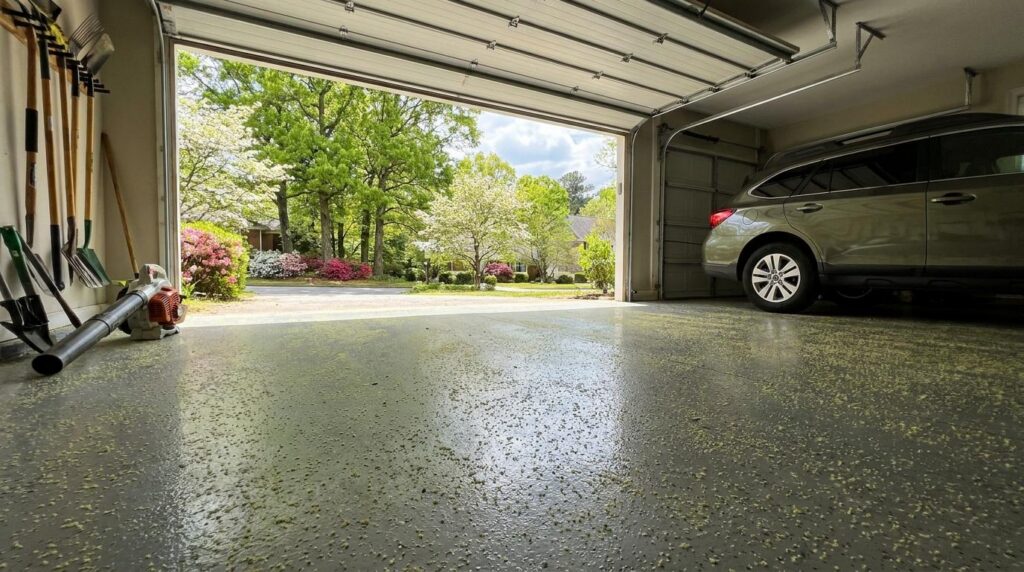
Georgia’s climate shifts create specific maintenance demands that homeowners in drier or cooler regions don’t face.
Spring Pollen Season
Metro Atlanta produces some of the heaviest pollen loads in the country between March and May. That yellow-green dust settles on every surface in an open garage, prompting calls from concerned homeowners from Decatur to Roswell about the same cloudy haze. Mop the floor weekly during pollen season with warm water to prevent buildup from bonding to the topcoat.
Summer Heat and Humidity
Hot car tires can leave marks on some coatings, but a 100% solids epoxy with a quality topcoat resists hot-tire transfer. Keep the garage ventilated when possible. If condensation forms on the floor during humid months, a quick dry mop prevents slip hazards.
Fall and Winter
Leaves, mud, and road debris tracked in from Georgia’s mild winters are easy to manage with regular sweeping. If you use salt or chemical deicers on your driveway, sweep the garage floor before any residue sits overnight.
What to Avoid on Epoxy Floors
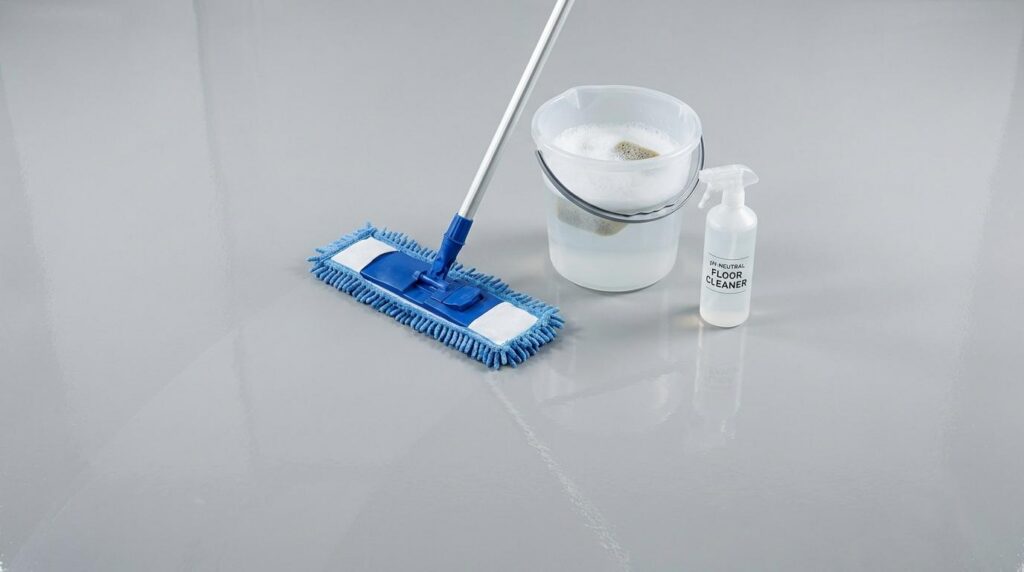
Epoxy is durable, but a few habits can shorten its lifespan:
- Harsh chemical cleaners: Bleach, ammonia, and vinegar-based cleaners degrade the topcoat over time. Use pH-neutral or mild soap-and-water solutions.
- Abrasive scrub pads: Steel wool and stiff-bristle brushes scratch the surface. Use a soft mop or microfiber pad instead.
- Dragging heavy objects: Toolboxes, equipment stands, and furniture legs can gouge the coating. Use rubber pads or lift items rather than sliding them.
- Standing chemicals: Battery acid, brake fluid, and certain fertilizers eat through the topcoat if left for extended periods. Wipe spills within minutes.
Each of these mistakes can be easily corrected once you know about them. None require special products or equipment to prevent.
Frequently Asked Questions
How often should I deep-clean my epoxy garage floor?
A thorough mop with warm water and a pH-neutral cleaner every two to four weeks keeps most epoxy floors in excellent condition. During Atlanta’s spring pollen season, increase that to weekly mopping to prevent buildup from bonding to the surface.
Do epoxy floors need to be resealed over time?
Not typically. A professionally installed 100% solids epoxy floor with a quality topcoat doesn’t require resealing during its expected 15- to 20-year service life. If the original surface preparation was done correctly, the coating maintains its protective seal without periodic refreshing.
Can pressure washing damage an epoxy floor?
Light pressure washing on a low setting is safe for removing stubborn buildup. Atlanta Concrete Coatings recommends keeping the nozzle at least 12 inches from the surface and using a fan tip rather than a pinpoint stream to avoid concentrating force in one spot.
Keep Your Floor Performing Year After Year
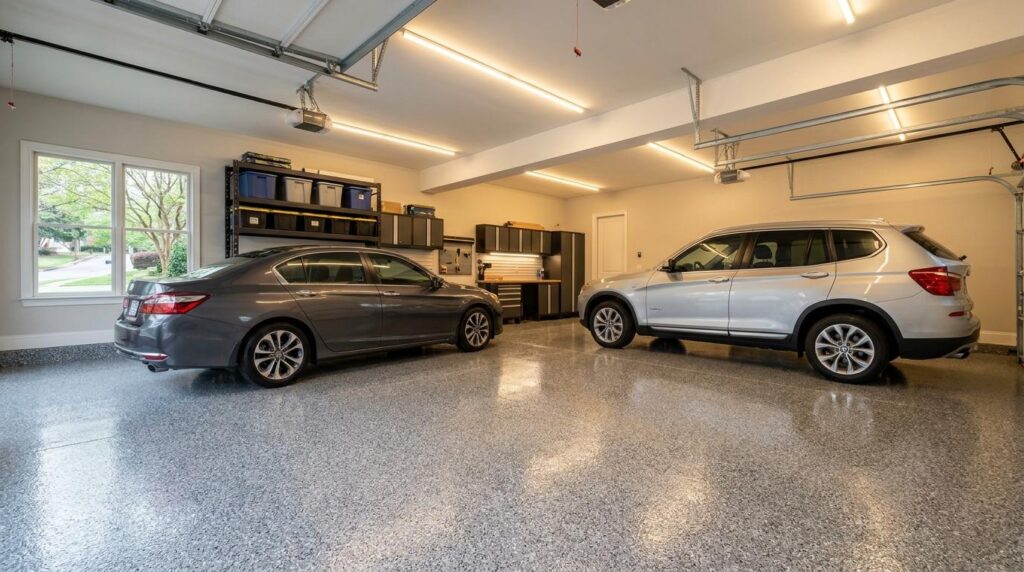
Epoxy floor maintenance in Atlanta comes down to consistent basic habits: sweep regularly, mop monthly, clean up spills quickly, and adjust your routine according to Georgia’s pollen and humidity. Avoiding harsh chemicals and abrasive tools protects the topcoat without any special effort.
A properly maintained epoxy floor can deliver 15 to 20 years of performance before it needs attention. That return depends on what you do after installation as much as the professional installation itself. The work is simple. The payoff is a floor that still looks the way it did the week it was installed.
Contact Atlanta Concrete Coatings for a free estimate on a new epoxy floor, or call (770) 626-4524 to discuss maintenance or installation.